The short version
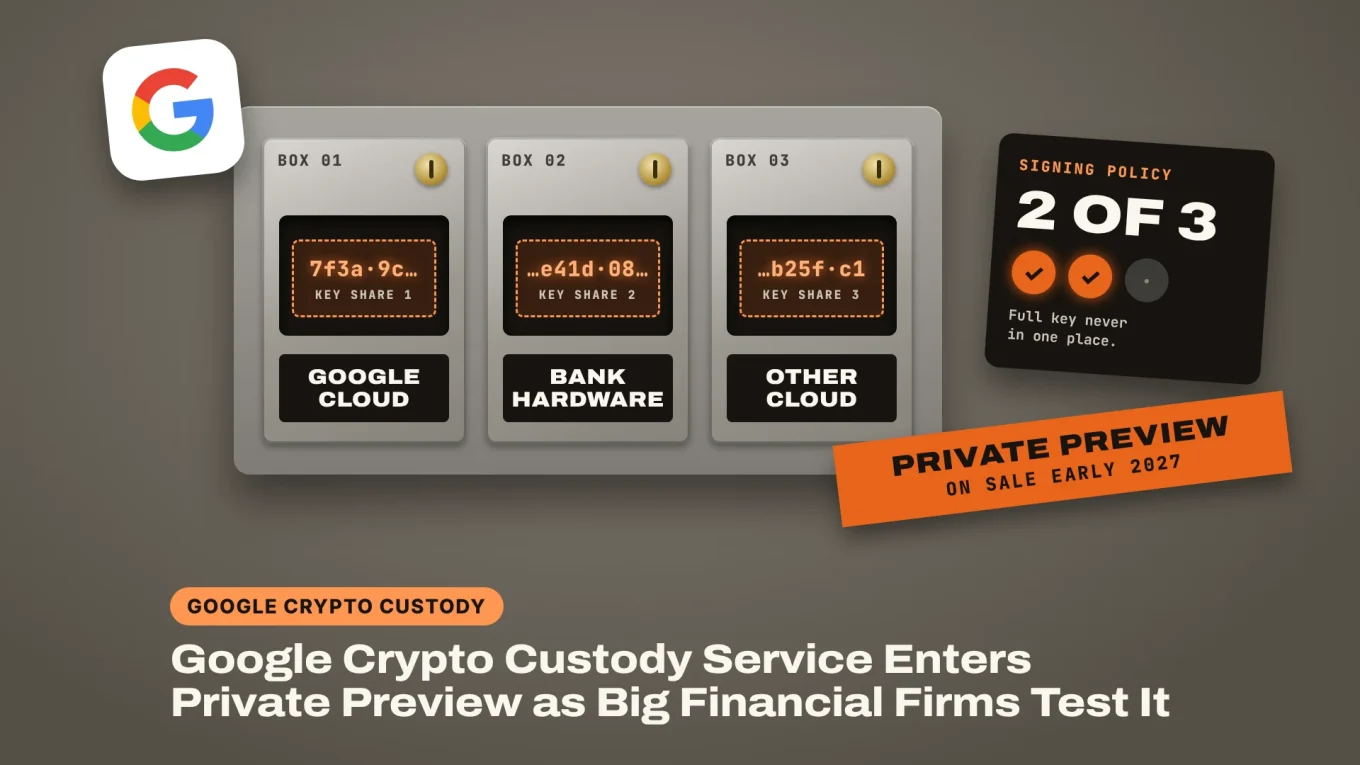
- Google crypto custody service Google Multi-Party Compute is in private preview, shown today at Google’s first digital assets symposium in New York, with sales planned for early 2027.
- It splits each private key across separate systems and checks the bank’s rules before signing; private key theft was 43.8% of all stolen crypto in 2024.
- The crew is watching which banks go public as users, after Alphabet already put its own Ethereum and Solana on it.
Google crypto plans just got serious. The company is showing a custody service called Google Multi-Party Compute at its first digital assets symposium in New York today, and some of the biggest names in finance are already testing it.
The crypto custody service is in private preview, so nobody can buy it yet. Google wants it on sale in early 2027. The question is simple: why would banks hand their crypto keys to Google, and what does the service actually do?
How Google Multi-Party Compute Works
It never builds the whole key. A crypto wallet is controlled by one private key, and whoever holds it can move the coins. Google’s service splits that key into fragments and keeps them in separate places: Google Cloud, the bank’s own hardware and even another cloud provider.
To sign a transaction, a set number of fragments has to agree, for example two of three or five of seven. Before anything is signed, a policy engine checks the bank’s own rules: transfer limits, allowed destinations, who has to approve. Google says the complete key is never stored in one place and that it can’t see the key material itself.
The idea isn’t new at Google. Its cloud team published a blueprint for this kind of signing in 2023. What’s new is a finished product with Google’s name on it.
Sponsored · Affiliate link
Save 20% on fees trading on WEEX
Base Camp may earn a commission if you sign up. It never affects what we write.
Why Banks Want MPC Custody
Because stolen keys are where the money goes. Private key compromises were the biggest single source of stolen crypto in 2024, at 43.8% of the total, according to Chainalysis. One hacked laptop or one rogue employee holding a full key can empty a wallet. With split keys, an attacker has to break into several separate systems at once.
Google says several design partners and major financial institutions are testing the service, but it hasn’t named them. Alphabet itself already uses it to guard its own crypto on Ethereum and Solana, though Google didn’t say which coins or how much.
SIDE TRAIL: Crypto Hacks in October: $129M Lost, DeFi’s Quietest Month
What Google Crypto Custody Means for the Market
Google walks straight into a market owned by specialists such as Fireblocks, BitGo and Fordefi. Its best selling point is neutrality: a bank that doesn’t want to rely on a crypto firm or a rival bank can rent the plumbing from Google instead.
Split keys still don’t fix everything. A badly written approval policy, or several key holders working together, can still lose funds. Google says the design could later support post-quantum signatures, but gave no timeline.
The Google crypto service is built for institutions, so none of this touches your own wallet. For your coins, the old rules still apply: your keys, your responsibility.
TRAIL MAP: Your First Crypto Wallet, Set Up Safely: Hot vs Cold and the Seed Phrase
Early 2027 is the date to watch. If big banks sign up by then, Google becomes one of the companies holding the keys to tokenized money.

In crypto since 2016. Covers altcoins and the daily market. When not trading, out climbing and traveling.
More from Teddy →