The short version
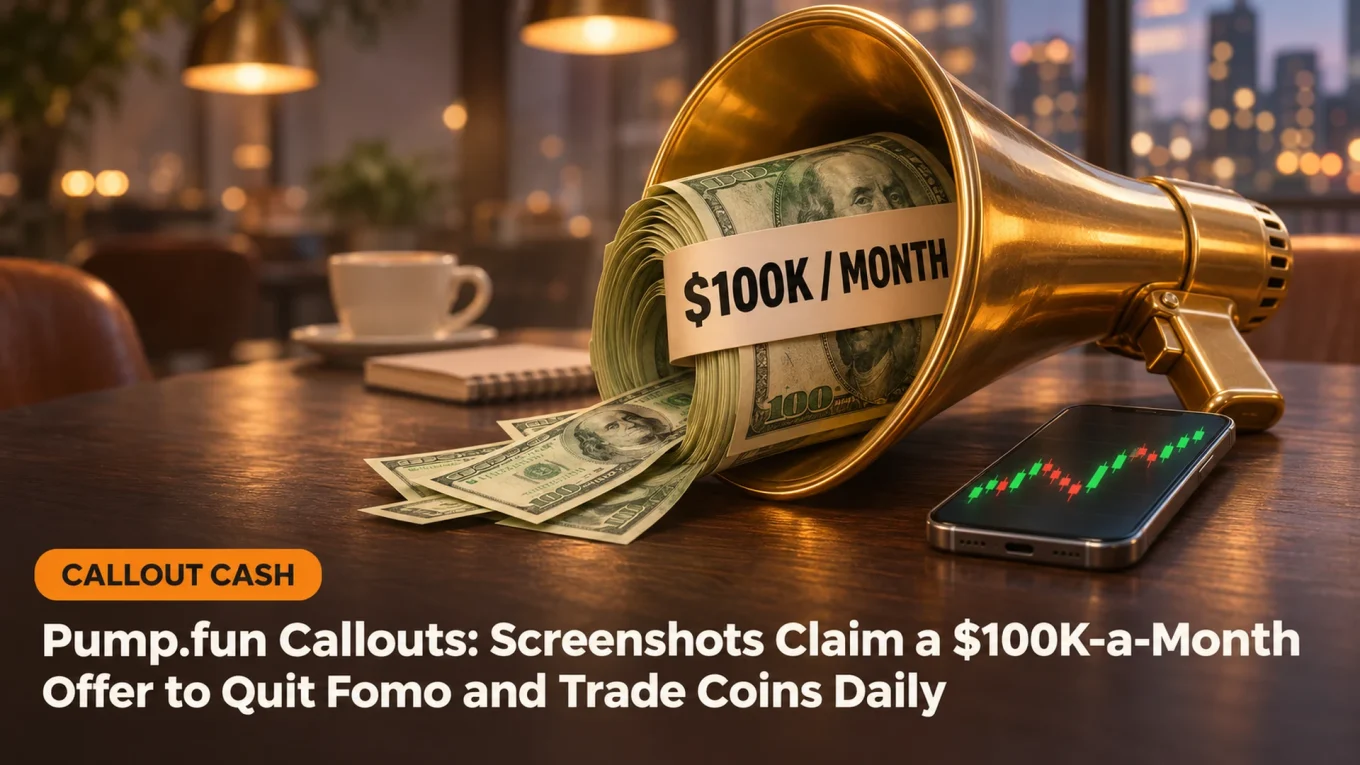
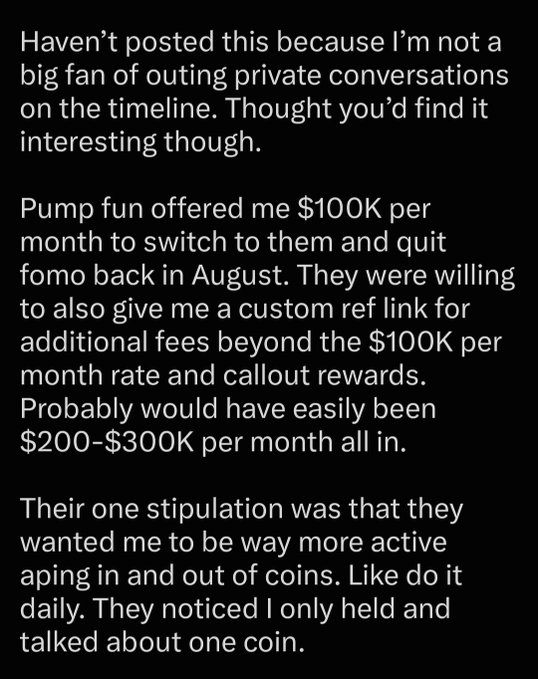
- Pump.fun callouts are in the spotlight after screenshots claimed the app offered a large account $100,000 a month in August to leave Fomo, with a total package of $200,000 to $300,000.
- The condition, by the anonymous account’s telling, was to trade coins in and out daily; it says it refused, and no contract has been shown.
- Fomo did $12.54 billion of trading app volume in 90 days against $3.52 billion for the Pump.fun app, per tehcscreener.com.
- Next: whether Pump.fun or Alon Cohen answers the claim; Pump.fun’s last official figure is $19 million paid to callers by October 15.
The memecoin app war just got its first price tag, and it is a big one.
Pseudonymous trader TheSolstice posted screenshots on X at 08:40 UTC on Wednesday, November 19, from a large account that doesn’t want to be named. In them, the account says Pump.fun offered it $100,000 a month in August to leave Fomo. The screenshots put Pump.fun callouts, the app’s paid trade ideas, at the center of the story: the offer, by the account’s telling, came with one condition. Trade more. Every day.
Nobody has shown a contract. The account is anonymous, and the screenshots are the only evidence. Pump.fun and its co-founder Alon Cohen had not replied to the claim at the time of writing.
TheSolstice shared the messages with a short summary of what the account was asked to do:

Info from a large account that does not wish to be named.
Part of pumpfun's stipulations is they want you to ape in and out of coins daily to drum up volume
They explicitly make it clear they don't want to reward holders and communities.
And we wonder why we're in this mess
What the Screenshots Say
“Pump fun offered me $100K per month to switch to them and quit fomo back in August,” the account wrote. The money had three parts.
- A flat $100,000 a month to move from Fomo to the Pump.fun app.
- A custom referral link that would pay extra fees on top.
- Callout Rewards, the app’s daily payouts to traders whose posts lead others to trade.
“Probably would have easily been $200-$300K per month all in,” it added.
Then came the catch. Pump.fun, the account says, noticed it only held and talked about one coin. The ask was to be “way more active aping in and out of coins. Like do it daily.”
The account says it refused. It offered to bring its followers to the app and hold there instead, but says Pump.fun had no interest without a promise of many more callouts. It also says it has no deal with Fomo.
TheSolstice’s own summary is blunter: Pump.fun wants volume, and “they explicitly make it clear they don’t want to reward holders and communities.”
One note before going further: Fomo is a Base Camp partner. Everything here comes from public posts and public data, and we’d write it the same way either way.
Sponsored · Affiliate link
Save 20% on fees trading on WEEX
Base Camp may earn a commission if you sign up. It never affects what we write.
What Are Pump.fun Callouts?
They are short trade posts on the Pump.fun app, and Pump.fun pays for the good ones in USDC every day.
Alon Cohen introduced Callout Rewards on August 13. The rule he described: if an app user trades a token because of your callout, you get paid pro rata, daily, based on how well that callout did. The person posting the idea is the caller.
Two weeks later Cohen said the weight given to how many callouts a user makes was “significantly reduced.” The goal, he wrote, was higher-quality posts on the app’s feed.
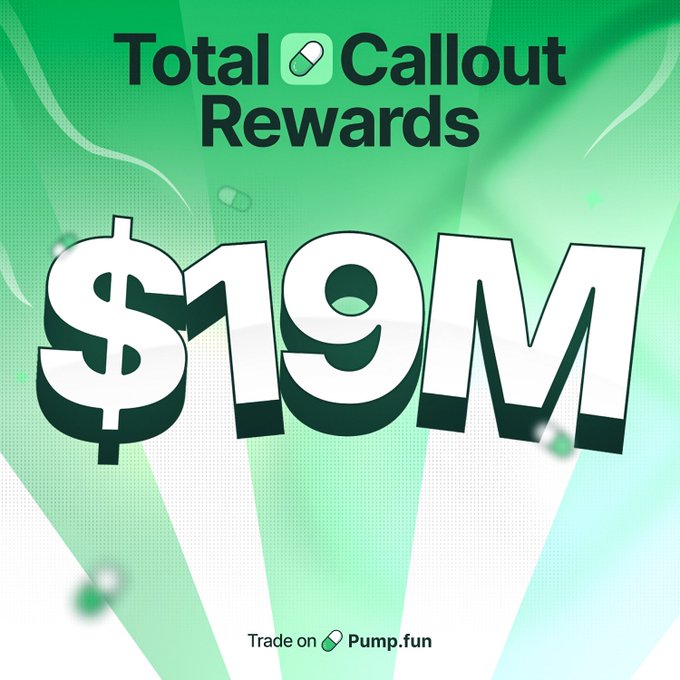
The money is real. Pump.fun said on October 15 that $19 million had gone to callers in two months.

The Callout Rewards algorithm may be evolving, but the rewards are still flowing!
$19,000,000 paid out to callers on the Pumpfun app in just 2 months 💰
The rules kept moving after that. In early November the app added a Diamond model that pays more for bigger coins and for holding, as we covered when Pump.fun revenue hit a two-month low.
That is the awkward part for Pump.fun. The public rules now say holding counts. The screenshots say that in August, at least, the private pitch was the opposite.
Pump.fun vs Fomo: Why Pay to Pull a Trader Over?
Because Fomo has been winning the app war, and a big caller brings traders along.
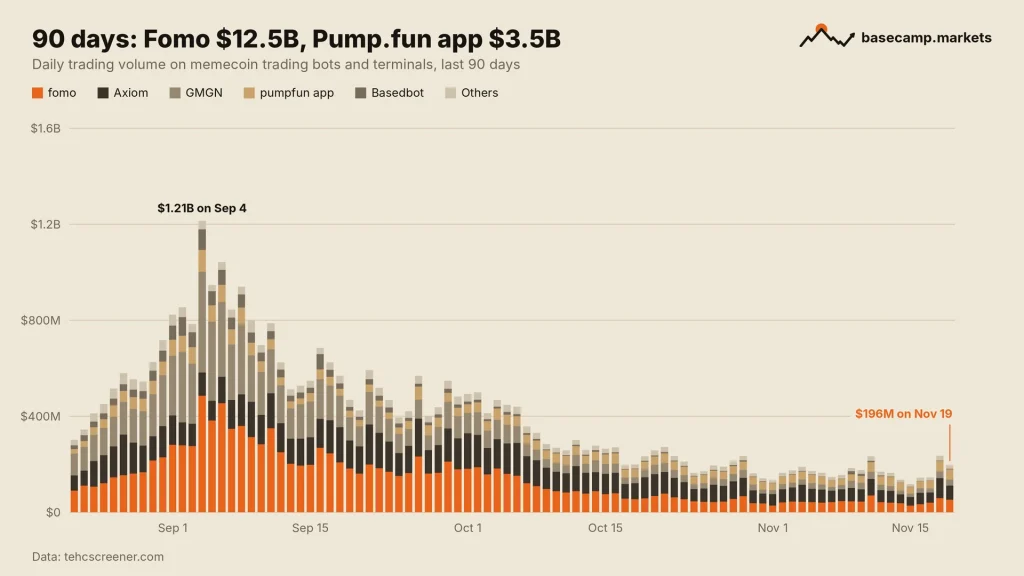
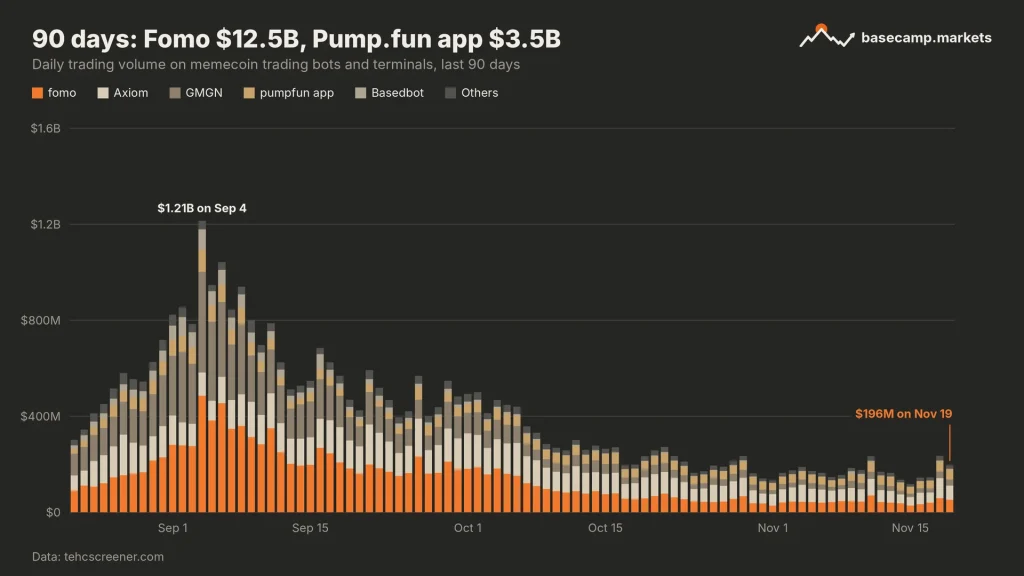
tehcscreener.com, which tracks memecoin trading apps and bots, puts Fomo at $12.54 billion of volume over the last 90 days. That’s the most of any app it tracks. Axiom did $8.49 billion and GMGN $8.12 billion. The Pump.fun app did $3.52 billion.
In other words, Fomo moved more than three times what the Pump.fun app did. Fomo is a trading app backed by venture firm Benchmark, and it lets users buy memecoins and bigger tokens from one account.
The pie is also shrinking fast. All the apps together did $196 million on November 19, only 16% of the $1.21 billion peak on September 4. Fewer traders means every big account with a following is worth more.
The gap is smaller on a single day. On November 19, Axiom led with $59 million, Fomo did $52 million and the Pump.fun app $43 million.
The token is not getting a lift from any of this. The PUMP price is $0.002518 at the time of writing, down 8% in 24 hours and 26.5% in a week. It sits 71% below its all-time high of $0.008819 from September 2025.
SIDE TRAIL: Pump Bridge vs FOMO: Why Memecoin Apps Now Build Their Own Bridges
What Does This Mean if You Follow Pump.fun Callouts?
It means asking who gets paid when you click buy.
A caller earns when followers trade on the back of a post. That is the design. A caller who trades in and out every day creates more of those moments than one who buys a coin and sits on it.
Pump.fun says it wants better posts. Cohen made that case in August when he cut the weight on callout counts:

Today we made some major improvements to how callout rewards are distributed moving forward
When we introduced callout rewards, the goal was to incentivize more high-quality content on the Pumpfun App’s social feed. This would ensure that retail and experienced traders alike are
The order matters too. The caller is usually in the coin before the post goes up. Followers buy after. When the caller sells, someone has to be on the other side of that trade, and in a thin memecoin that is often the people who just followed.
None of this proves anyone did something wrong. Paying people for content is normal, and many callers post in good faith. But a payout that grows with activity is a reason to read a callout as an ad until it proves otherwise.
A few plain checks help. Look at when the caller bought, not only what they posted. Check whether they still hold a week later. And size every trade so a rug pull doesn’t sink the account.
TRAIL MAP: MIKA Token Crashes 99% Minutes After Influencer Posts Wallet Key on X
Pump.fun Hasn’t Answered Yet
The claim is now public, and the company that could settle it hasn’t spoken.
Cohen was on X on November 16 announcing Polymarket on the Pump.fun app, with Callout Rewards “supported from day 1.” Nothing on the August offer has followed. The last official payout figure for Pump.fun callouts is still the $19 million from October 15.

Satoshi Flipper has more than 20 years of trading experience, starting in stocks before moving into crypto in 2017, and holds an MBA from the Kellogg School of Management. The edge is reading the economic data: rate decisions, inflation, jobs numbers, earnings and the US markets that move Bitcoin.
More from Satoshi Flipper