The short version
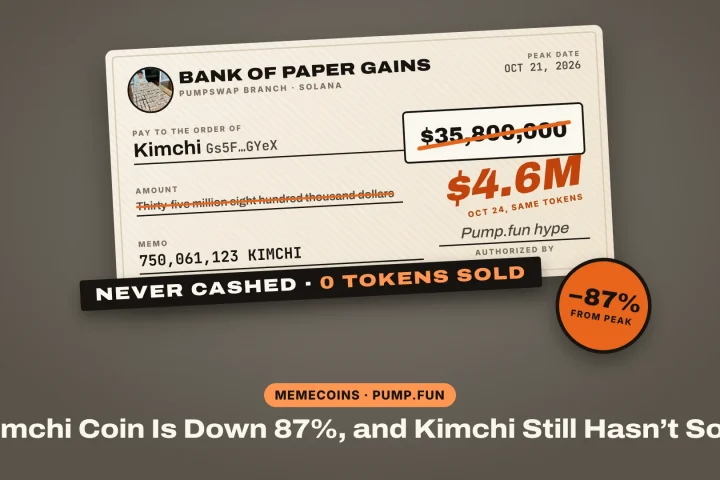
- Kimchi coin buyers are down 75% from the $47.7 million peak, while one three-hour-old wallet paid about $9,300 for 79% of the supply at launch.
- Kimchi’s wallet still holds 75.3% of KIMCHI and collects every creator fee forever, so Pump.fun’s “$32 million” claim is mostly paper value against $377,000 of liquidity.
- The crew is watching the $9.85 million October 22 low and that one wallet, because any selling from it would land on a very thin pool.
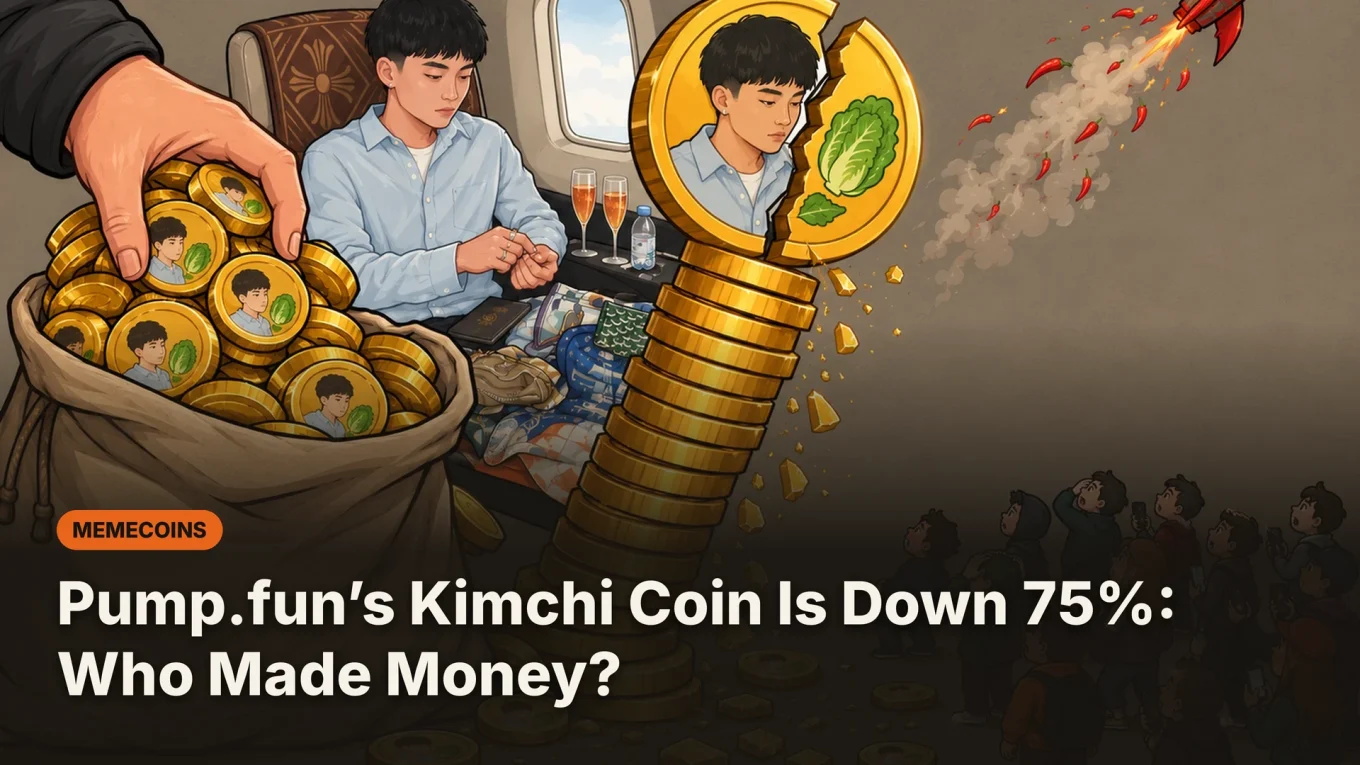
The Kimchi coin was meant to be Pump.fun’s big pop-culture moment. Two days later it reads more like a case study. The KIMCHI memecoin, a Solana token tied to the pseudonymous trader Pump.fun signed this week, sits at an $11.9 million market cap at the time of writing. That’s down 52% over 24 hours and about 75% below its $47.7 million peak on October 21.
The on-chain trail is short and ugly. One wallet bought 79% of the supply for about $9,300 in the very first second. So who actually made money, and what could a buyer have spotted before clicking buy?
Pump.fun co-founder Alon Cohen announced the deal 19 minutes after the coin started trading:

Kimchi is the first person to truly cross the chasm between crypto and pop culture; the first ever example of a trader becoming a celebrity.
He represents exactly where we’re heading: a massive social trading ecosystem that onboards retail and grows to 10x the size we were last
What Happened With the Kimchi Coin?
A three-hour-old wallet minted the coin, bought most of it and handed it to Kimchi within a minute. The mint came at 23:00 UTC on October 20, with 793 million of the 1 billion tokens bought for 85.7 SOL, according to on-chain records. In the same second, it named Kimchi’s wallet the permanent recipient of every creator fee. Pump.fun’s own docs say that setting can be made only once.
Kimchi posted on X six seconds after the mint, the first post in five days. The deployer sent 750 million tokens to Kimchi’s wallet within a minute, and Pump.fun ran its Kimchi ad 78 seconds after the coin existed. The market cap tagged $41.9 million inside the first hour.
The Defiant laid out the minute-by-minute record:

Pump.fun is facing backlash over pseudonymous trader Kimchi and it's not only about a marketing campaign.
Here's what onchain records say happened Tuesday night, ET:
7:00:15 pm — A 3-hr old Solana wallet creates the Kimchi coin and buys 79% of the supply for
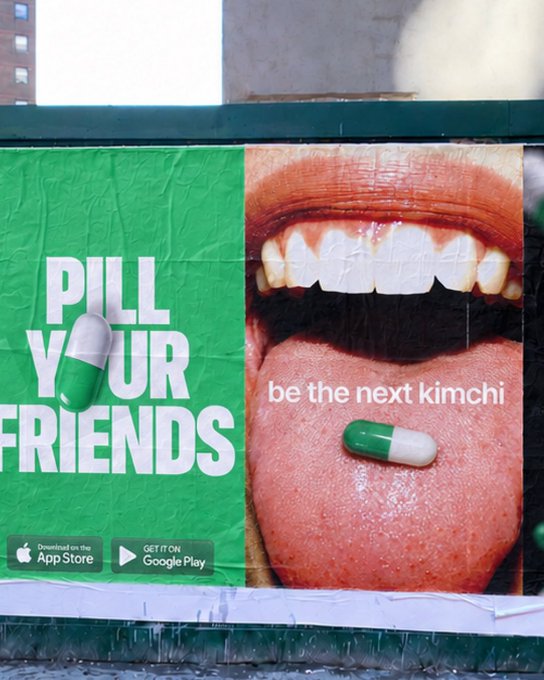
The Pump.fun Kimchi deal is marketing first. The launchpad says Kimchi is helping shape its “creative direction” and reach people outside crypto Twitter. The pitch rests on a claimed $40 million profit on TRUMP, which has no public proof. Community Notes on both launch posts say as much.
DISCOVER: The 10 Most Common Crypto Scams and How to Spot Them
Who Made Money on KIMCHI?
The people who were there first. Here’s the scoreboard so far:
- The deployer. It sold its leftover 43.1 million tokens and holds 375 SOL. Its profit is estimated at about ,000.
- Kimchi’s wallet. Creator fees paid it 164 SOL, roughly $17,800, in the first 80 minutes alone, and every trade since adds more. It also still holds 75.3% of the supply, GeckoTerminal data shows.
- Early snipers. Sniper bots that bought in the opening minutes reportedly made more than the deployer.
- Pump.fun. The launchpad takes its own cut of every swap, and KIMCHI has traded more than $65 million in its main pool since launch.
And who paid for it? Everyone who bought the hype. A buyer at the $47.7 million top is down 75%.
Pump.fun’s ecosystem account bragged that Kimchi “MADE $32,000,000 ON PUMPFUN 30 MINS AFTER JOINING.” That’s screen value. In other words, 75.3% of supply at today’s price is worth about $8.9 million on paper, while the main pool holds roughly $377,000 of liquidity. Selling even a small slice would sink the price.
Round two came late on October 22. Kimchi posted an image with a QR code pointing to a second Kimchi coin. Alon reposted it and the new coin briefly hit about $10 million. Hours later the repost was gone. Kimchi deleted the post, dropped “pump.fun” from the X bio, and that coin sank to about $190,000. The original KIMCHI spiked to $21 million in the same hour, then wicked down to $9.85 million.
Memecoin Red Flags: Check These Before You Buy
These memecoin red flags each took one tap to see on KIMCHI. Run through them before you buy any new launch:
- One wallet holds most of the supply. Open the holders tab on Solscan or a bubble map. KIMCHI’s top 10 wallets still hold 80.2%.
- The creator wallet is hours old, funded from nowhere you can trace.
- All creator fees go to one address, locked forever.
- The launch, the influencer post and the ad land in the same minute.
- Profit claims quote market cap. Compare it with liquidity on DexScreener; a big gap makes late buyers the exit liquidity.
- Copycats share the ticker. DexScreener lists at least eight Kimchi tokens on Solana right now, so check the contract address.
- Promoters delete posts or edit their bio once the price turns.
KIMCHI Price Analysis: Can It Hold $9.85 Million?
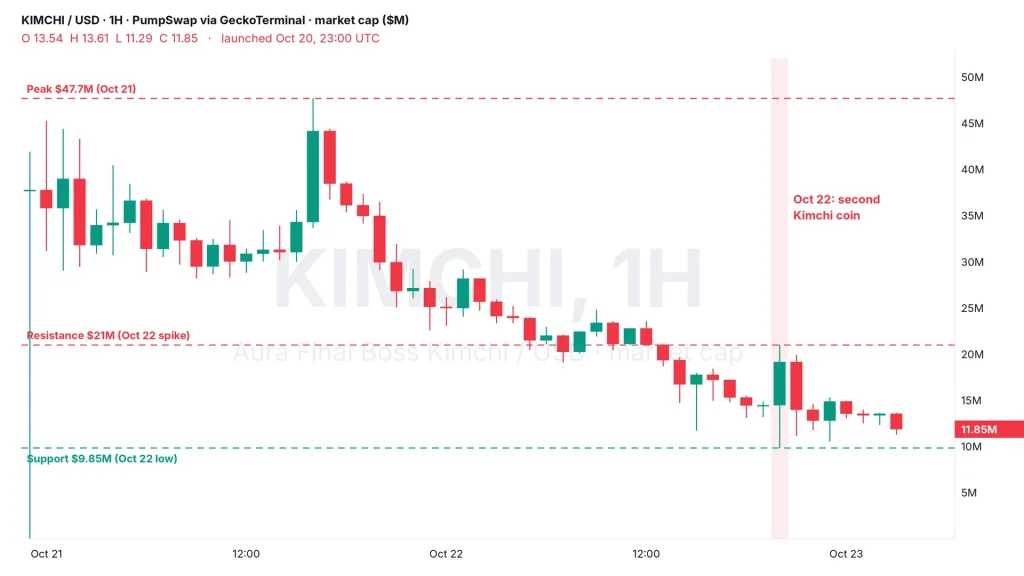
Barely. KIMCHI sits about 20% above the October 22 low at $9.85 million, and every bounce since the peak has made a lower high. At two days old it has no useful moving averages, so the levels come straight from the chart.
- In the bull case, a reclaim of $21 million, the October 22 spike high, would show buyers stepping back in.
- In the base case, KIMCHI chops between $9.85 million and $15 million while the news cycle moves on.
- In the bear case, losing $9.85 million leaves no chart support below, only the 75.3% wallet.
Sponsored · Affiliate link
Save 20% on fees trading on WEEX
Base Camp may earn a commission if you sign up. It never affects what we write.
EXPLORE: Market Cap, Supply and Why “Cheap” Coins Aren’t Cheap
As long as three quarters of KIMCHI sits in one address, every level above is a suggestion. Watch that wallet, not the candles.

On the climb since 2017. Trades futures and reads onchain data. Automates the boring parts.
More from VikingXBT →