The short version
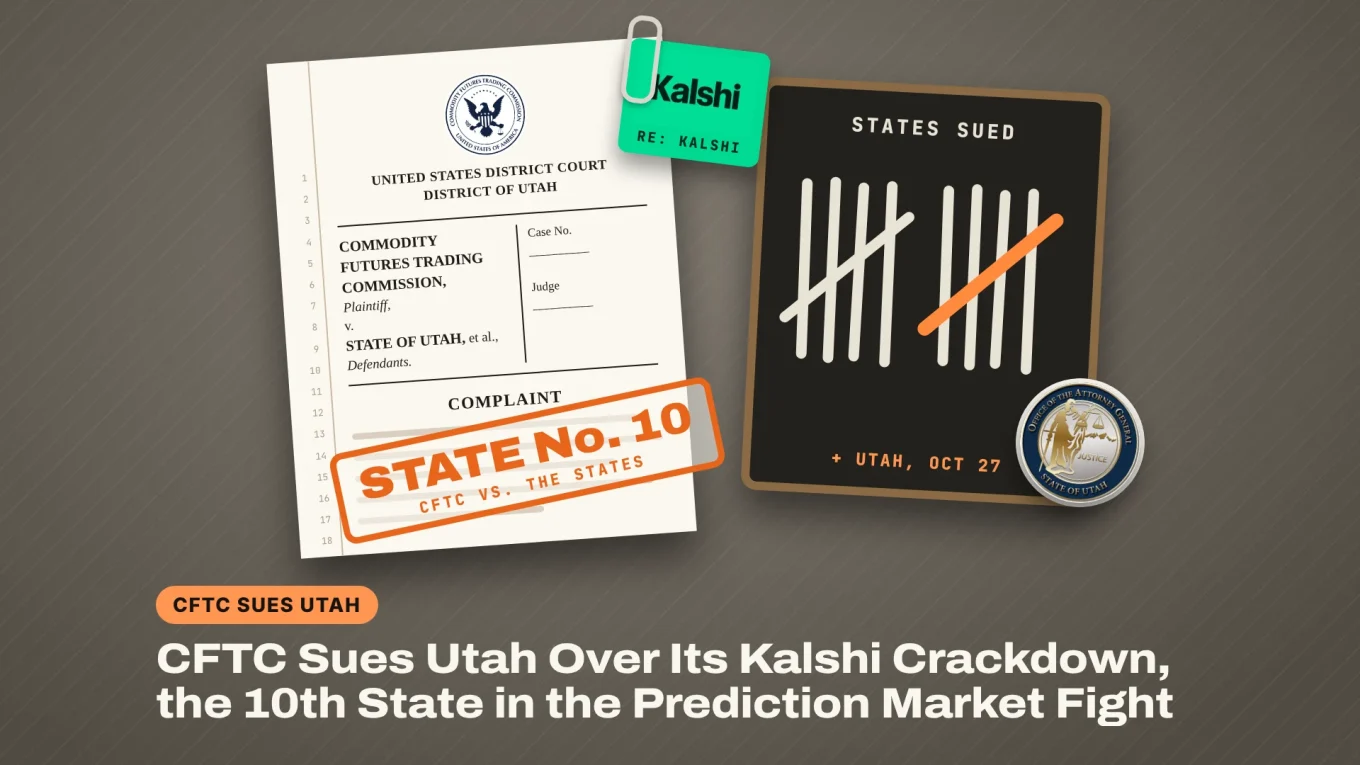
- CFTC sues Utah: on October 27 the agency went to federal court to stop Utah using gambling law against Kalshi, the 10th state it has sued over prediction markets since April.
- Utah wants Kalshi switched off for its users and its Utah fees, put at roughly $31 million to $61 million, handed back, and a federal judge already ruled for Utah against Kalshi in August.
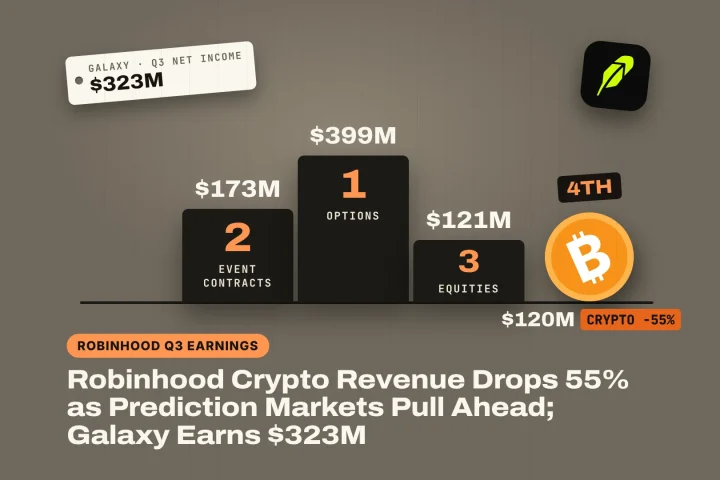
- The crew is watching whether the CFTC gets a better hearing than Kalshi did and how the Tenth Circuit rules, while Robinhood now earns more from event contracts ($173 million) than from crypto ($120 million).
The CFTC sues Utah, and the scorecard now reads ten states. On October 27, the Commodity Futures Trading Commission filed a lawsuit to stop Utah from using its gambling laws against CFTC-registered prediction markets, one week after the state took Kalshi to court.
Utah also stands out from the other nine. It is the one state where a federal judge has already sided with the state on this exact question. So can Washington win a fight its biggest exchange already lost?
CFTC Chairman Michael Selig posted the agency’s line within the hour:

Congress entrusted the @CFTC with the responsibility of ensuring uniform national regulation of prediction markets under a single federal rulebook.
As I’ve said before, the agency has the expertise and authority to defend its exclusive jurisdiction over commodity derivatives,
Why Did the CFTC Sue Utah?
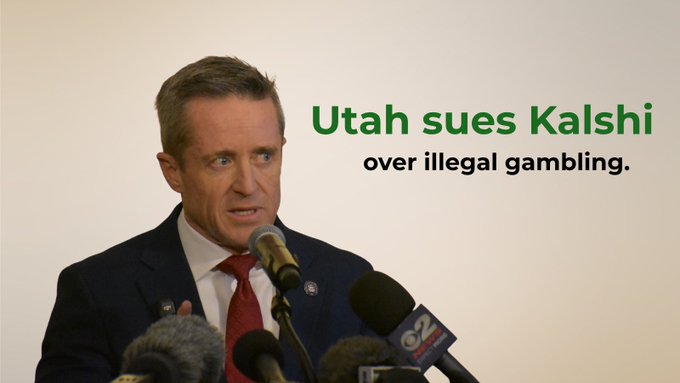
Because Utah went after Kalshi’s money. On October 20, Attorney General Derek Brown sued Kalshi in state court and declared online gambling a public nuisance. “Kalshi runs an online casino in Utah and calls it a prediction market,” Brown said.
The 63-page complaint also names two Susquehanna trading firms. It asks the court to block sports, election, politics, culture and “mention” contracts for Utah users through a court-approved geolocation check, and to make the companies hand back their gains. The state puts Kalshi’s Utah fees at roughly $31 million to $61 million and counts more than 32,000 verified Utah accounts, the Deseret News reported.
Here’s the catch in the Utah Kalshi lawsuit. It sued Utah first, back in February, arguing that federal law overrides state gambling rules. In August, US District Judge Robert Shelby ruled for Utah, and on September 8 the Tenth Circuit refused to block Utah’s laws while Kalshi appeals. Utah’s attorney general put it bluntly:

Gambling is illegal in Utah. Kalshi advertised its sports and election bets as “legal in all 50 states” anyway.
Utah is suing, alleging Kalshi kept taking bets from Utahns after a federal judge rejected its argument that Utah law doesn’t apply.
Sponsored · Affiliate link
Save 20% on fees trading on WEEX
Base Camp may earn a commission if you sign up. It never affects what we write.
CFTC Sues Utah as State Number Ten
Now the federal government is the plaintiff, not Kalshi. When the CFTC sues Utah, it brings its own argument rather than an exchange’s. The CFTC argues that Congress gave it exclusive jurisdiction over contracts traded on registered exchanges, so a state can’t shut them down with its own laws. “Utah seeks to shut down prediction markets across a wide variety of markets,” Selig said in the release.
It is the same playbook the agency has run since April, and Utah is the 10th state on the list.
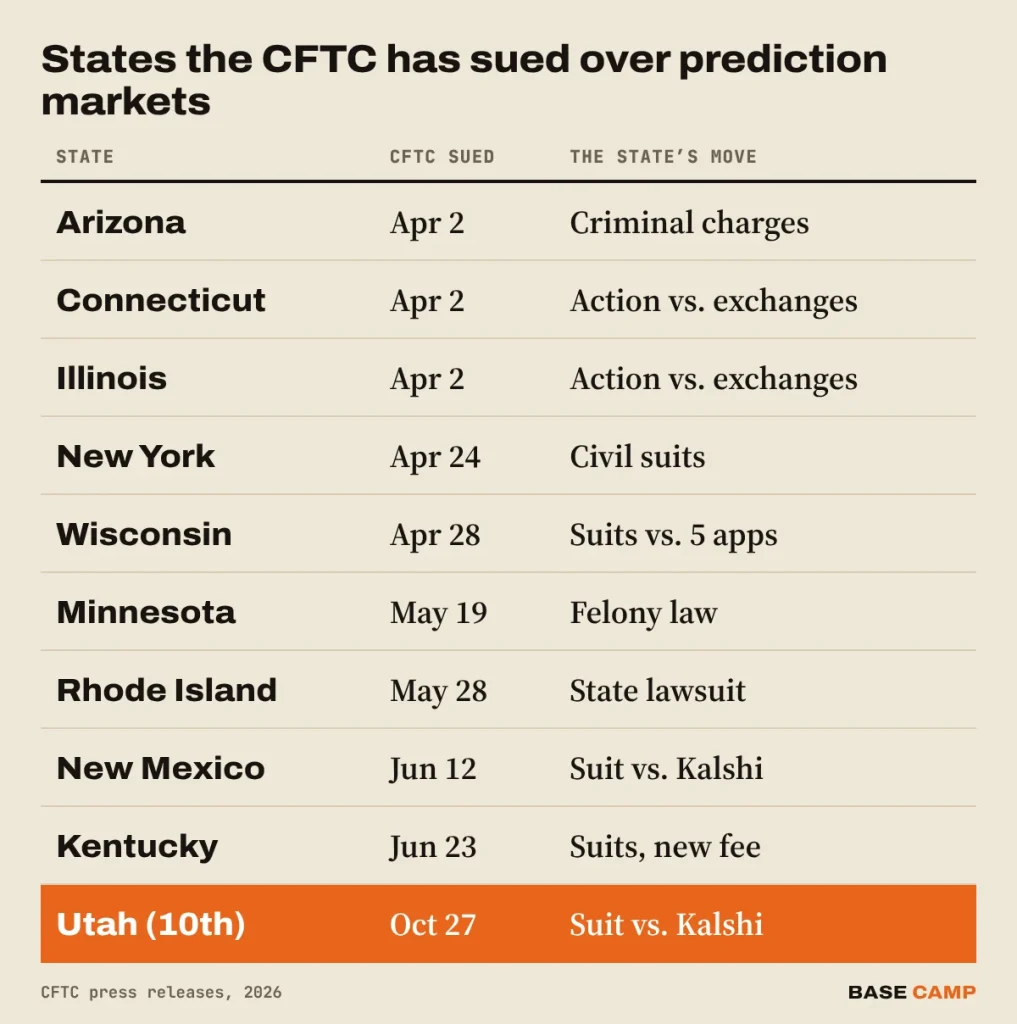
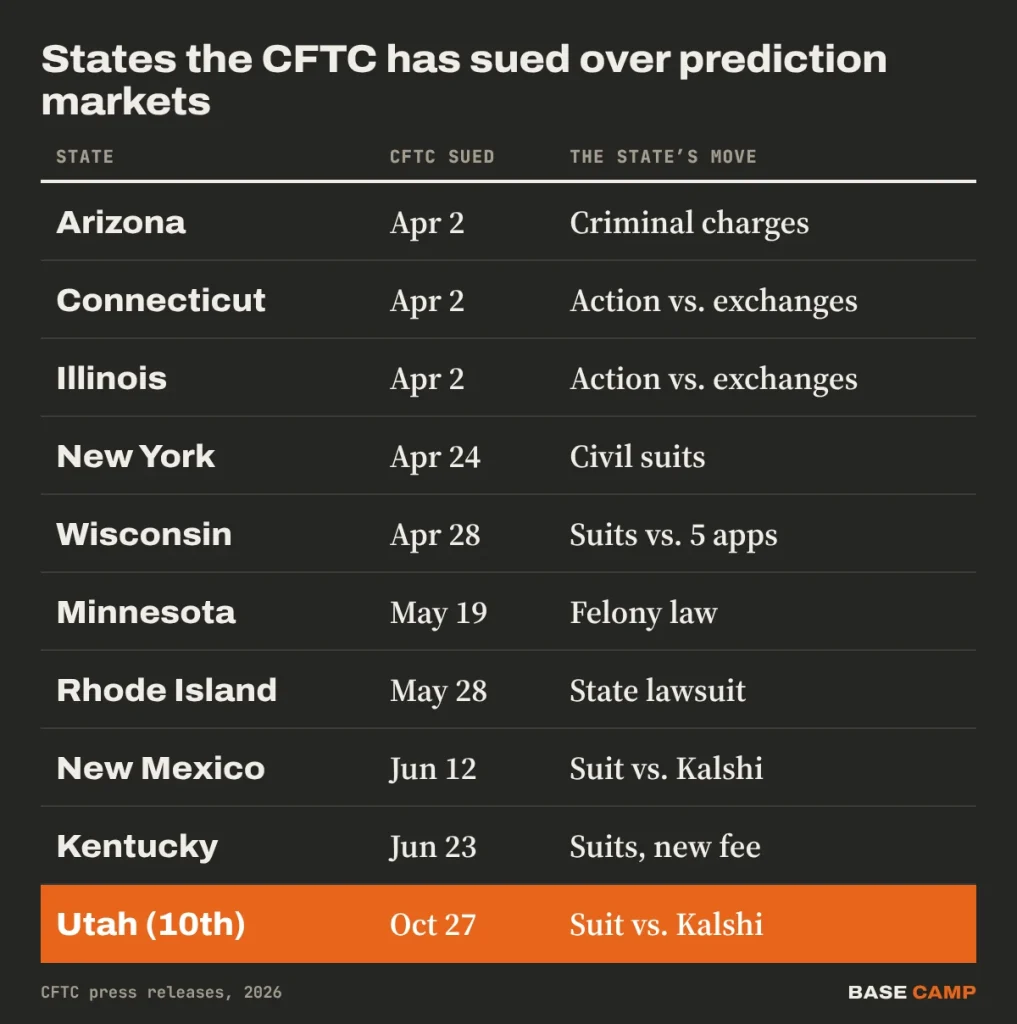
The record so far is mixed. In Arizona, the CFTC won a temporary restraining order in April that halted the state’s criminal case. In Utah, the starting point is a federal court that has already read the law the state’s way.
SIDE TRAIL: Phantom Prediction Markets Split in Two: Kalshi for the US, World for Everyone Else
Why Crypto Traders Should Care
Prediction markets now sit inside the apps crypto traders already use. When Wisconsin sued in April, its targets were Kalshi, Polymarket, Crypto.com, Robinhood and Coinbase, according to the CFTC’s own release.
The money explains the fight. Robinhood’s Q3 results, filed on October 27, show event contracts revenue of $173 million, up more than six times in a year. Crypto revenue fell 55% to $120 million. In other words, betting on outcomes out-earned crypto trading at one of the biggest US brokers last quarter, and the same filing lists state enforcement as a risk that could force it to stop offering some contracts.
What the Crew Is Watching
Two things. First, whether a Utah federal court treats the CFTC differently from Kalshi, or whether the Tenth Circuit settles both cases at once. Second, whether the state court moves first on Utah’s request to switch Kalshi off for Utah users.
Every new prediction markets lawsuit adds to the pile, and a split between the circuits would push the question toward the Supreme Court. Until then, which markets you can trade may depend on the state you open the app in.
TRAIL MAP: CFTC Crypto Rules Explained: The Plan to Bring Leveraged Retail Crypto Trading Onshore
For the basics, our glossary explains how a prediction market prices the odds.

In crypto since 2016. Trades the macro picture and reads the market on the high timeframes.
More from TheCryptoMonk →