The short version
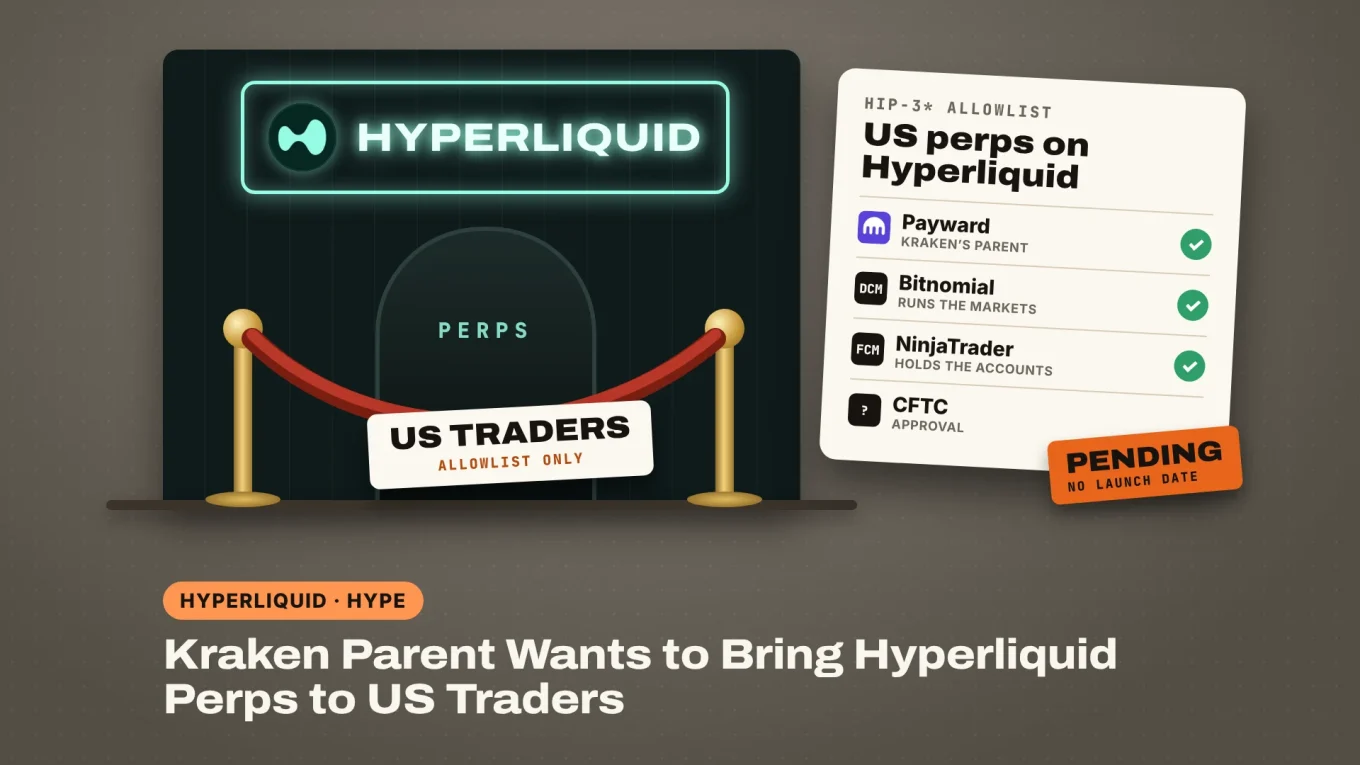
- Kraken Hyperliquid plan: Kraken’s parent Payward wants to run CFTC-regulated perps for US clients on Hyperliquid, with Bitnomial as the deployer and NinjaTrader Clearing holding the accounts.
- Nothing is approved yet: the CFTC must sign off and HIP-3*, the allowlist that lets only checked accounts trade, is still on testnet, while HIP-3 markets already hold about $4.04 billion of open interest.
- The crew is watching HYPE at $82.54 and $74.45: the same plan sent it up 25% in September, but this time it gave back a $2 pop within three hours.
The Kraken Hyperliquid plan is back, and this time it has a technical blueprint. On Monday, October 26, Hyperliquid said Kraken’s parent company Payward wants to be the first CFTC-regulated deployer on its exchange, running perpetual futures for US clients through a new permissioned setup called HIP-3*.
The HYPE price jumped from $78.35 to $80.48 within the hour of the post, then gave all of it back within three hours. It trades at $77.75 at the time of writing, up 3% in 24 hours. When Payward first floated the plan on September 16, HYPE ran 25% in a week. So what is actually new, and why did the market shrug?
Hyperliquid laid out the setup on X at 17:35 UTC:

Payward, the parent company of Kraken, announced its intention to be the first CFTC-regulated deployer on HIP-3* markets. Payward will use Hyperliquid as the infrastructure layer to deploy perpetual futures markets for US clients. Subject to regulatory approval, Bitnomial,
What Is the Kraken Hyperliquid Plan?
A regulated side door into Hyperliquid for US traders, built from companies Payward already owns. Nothing is live, and every step still needs the CFTC’s approval.
Payward bought Bitnomial in May, which gave it the full US derivatives stack: a futures exchange license, a clearing house license and a futures broker. The Hyperliquid plan puts all three to work.
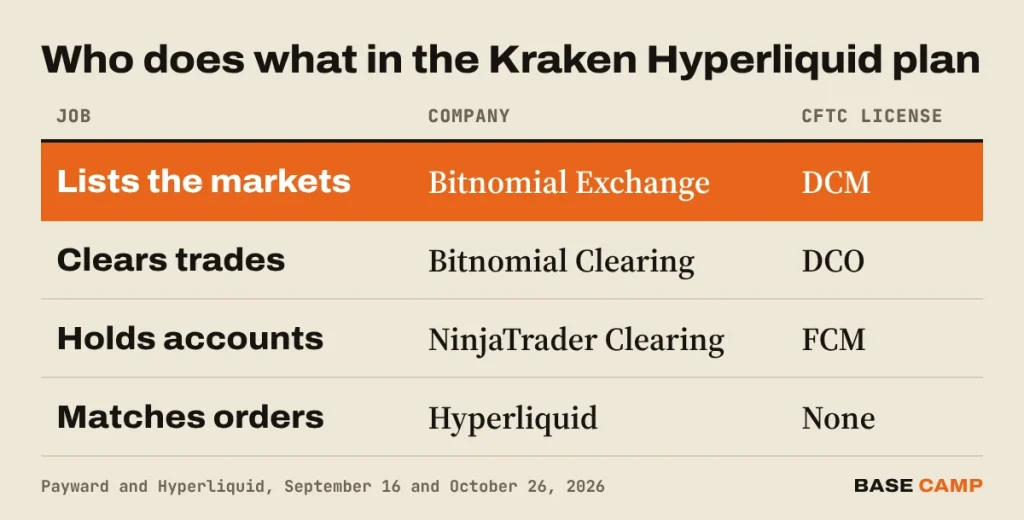
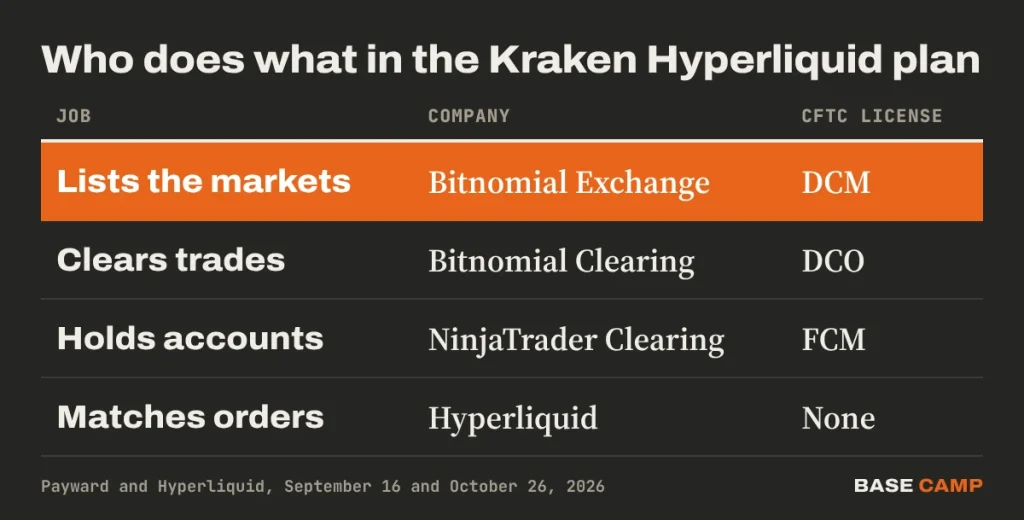
A US client would open a futures account with NinjaTrader, Payward’s broker, and trade contracts that Bitnomial lists. The orders would sit in Hyperliquid’s on-chain order book next to everyone else’s. Payward co-CEO Arjun Sethi said in the September announcement that Payward “intends to be the first, holding the keys and carrying the regulatory obligations.”
Sponsored · Affiliate link
Save 5% on fees trading on TxFlow
Base Camp may earn a commission if you sign up. It never affects what we write.
What Is HIP-3* and Why Does It Matter?
HIP-3* is an optional allowlist for HIP-3 markets. It lets a deployer decide on-chain which wallets may trade its markets, so only checked accounts get in.
HIP-3 itself has been live for months. It lets anyone who stakes 500,000 HYPE, about $39 million today, for at least 183 days launch their own perp markets on Hyperliquid. Ten deployers run HIP-3 markets right now, and they hold about $4.04 billion in open interest, according to Hyperliquid’s API. That is 27% of the exchange’s total, next to $11.03 billion on Hyperliquid’s own perps. Almost all of it sits on one deployer, XYZ, whose S&P 500, gold and oil contracts are its biggest.
What a regulated firm can’t do is let anyone trade. Under HIP-3*, Bitnomial would only admit accounts on both its own allowlist and NinjaTrader’s. Hyperliquid stressed that the feature is “strictly additive”: existing markets stay as they are, and the first version runs only on testnet. Mainnet support comes in a future network upgrade, with no date given.
SIDE TRAIL: Lighter CFTC Plan Sent LIT Up 12% in 40 Minutes. Two Days Later, the Pump Was Gone
When Can US Traders Use Hyperliquid?
Not yet, and no date exists. Hyperliquid’s own front end is still closed to US users, and nothing in this plan changes that.
The plan needs three things that haven’t happened: CFTC approval for Bitnomial to list the contracts, the HIP-3* upgrade on mainnet, and the first markets themselves. Neither Payward nor Hyperliquid has said which contracts come first. Even after a launch, US traders would see only Bitnomial’s markets, not the main Hyperliquid order books, so a US retail trader wouldn’t simply log in to Hyperliquid.
For Hyperliquid, the prize is the flow. Payward says it has 6.6 million funded accounts. If a slice of the US futures crowd ends up routed into Hyperliquid’s order book, every trade pays fees into a protocol that uses them to buy back HYPE.
HYPE Price Analysis: Why Didn’t the News Move It?
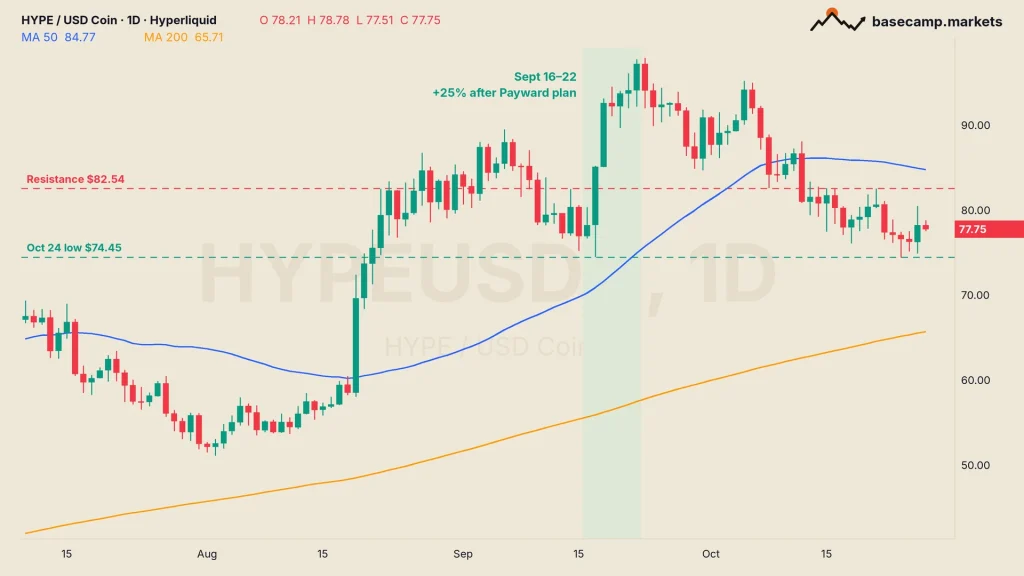
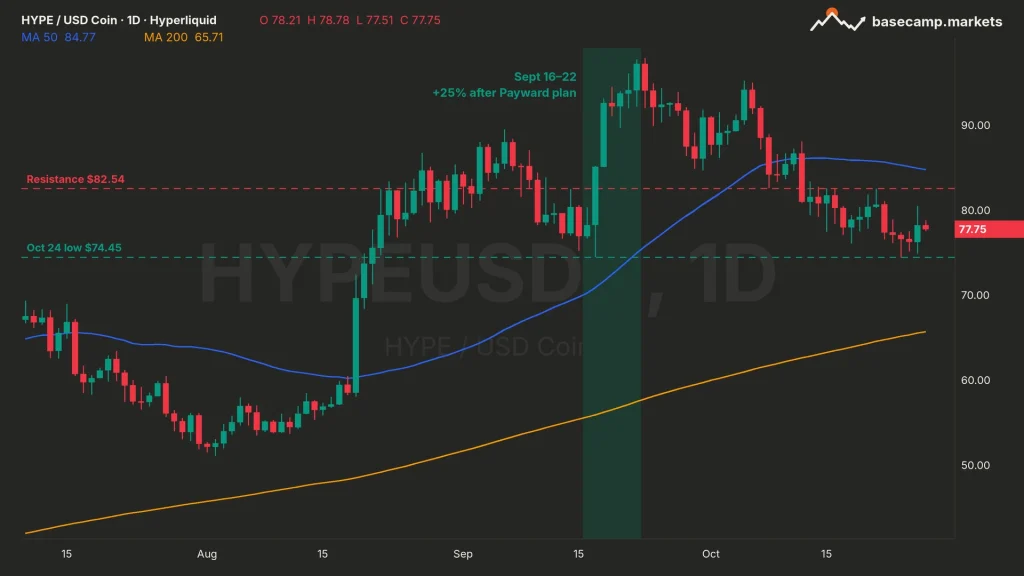
Because the market already paid for this story once. In September, HYPE went from $78.22 on the day of Payward’s announcement to almost $98 a week later. All of that is gone: HYPE is back at the same price, 21% below its September 23 record of $97.96.
The daily chart has turned against the bulls since. HYPE closed below its 50-day moving average on October 12 and hasn’t closed above it since; the line now sits at $84.77. The 200-day sits far below at $65.71, so the bigger trend is still up.
- Bull case: a daily close above $82.54, the ceiling that has capped every bounce since October 13, opens the way to the 50-day at $84.77.
- Base case: a range between $74.45 and $82.54 while the market waits for the CFTC.
- Bear case: a daily close under $74.45, Saturday’s low, puts the September breakout in doubt.
The next real catalyst is the CFTC’s answer, or the date of the network upgrade that switches HIP-3* on. Until either comes, the Kraken Hyperliquid plan is a promise HYPE has already traded once.
TRAIL MAP: Futures and Leverage Explained: Perps, Margin and How Liquidation Really Works

In crypto since 2017. A technical trader with years of experience in DeFi and onchain data.
More from TANG →