The short version
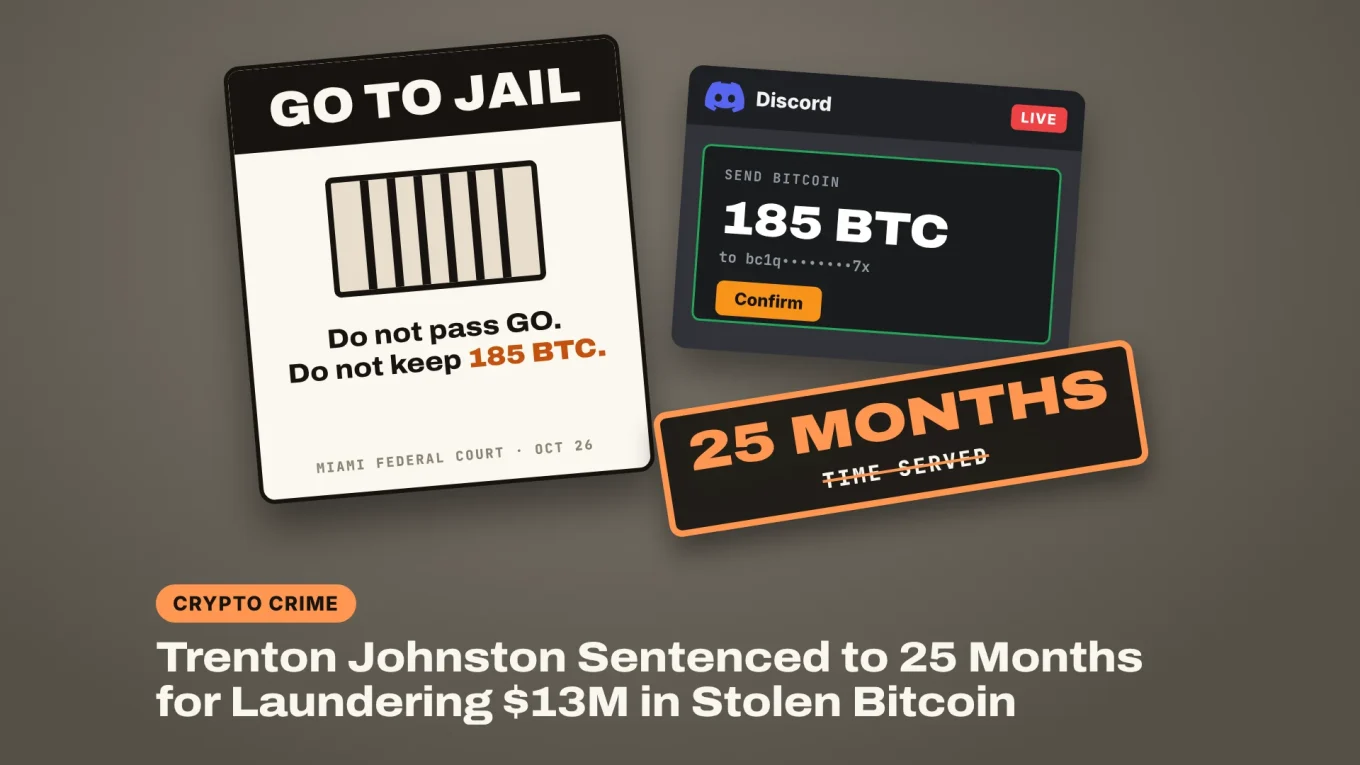
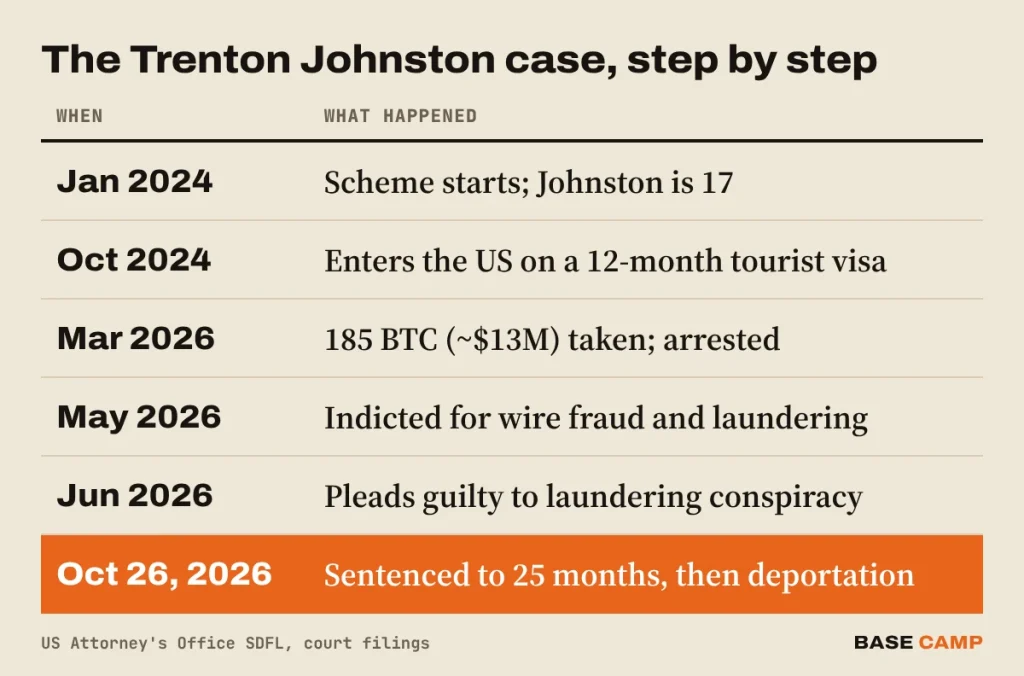
- Trenton Johnston, the Canadian who laundered 185 BTC (about $13 million) stolen from a California victim, was sentenced in Miami on October 26 to 25 months in prison, not time served as first reported.
- He posed as Google and crypto support to get wallet codes, bragged on Discord and spent on a Lamborghini and private jets; he handed back only about $3.8 million.
- The crew is watching the co-defendant’s sentence and any restitution order; real support never asks for a seed phrase, a code or a screen share.
Trenton Johnston, the Canadian who posed as tech support and helped empty a California victim’s wallet of 185 BTC, was sentenced in Miami on Monday. The number is 25 months in federal prison. Early reports said time served. They were wrong.
He was 17 when the scheme started. By 19 he was riding in the back of a Rolls-Royce Cullinan when police stopped him in North Miami. So how did a fake support call turn into a Lamborghini, and why did prosecutors settle for half the prison time they first asked for?
AlphaWire’s post on the case went around crypto X on Wednesday:

🚨 CRYPTO SCAMMER WHO STOLE $13M CAUGHT AFTER BRAGGING ABOUT IT ON DISCORD
A Canadian man who began stealing cryptocurrency at just 17 has been sentenced to 25 months in prison after pleading guilty to conspiracy to commit money laundering.
Trenton Johnston and an accomplice

How the Trenton Johnston Scam Worked
It was a phone-and-screen con, not a hack. Johnston and his partners posed as support staff for Google and for crypto companies, talked victims into handing over their wallet codes and moved the coins out, according to the Justice Department’s indictment release. Investigators tied at least $13.04 million in stolen crypto to him.
The biggest hit came in March. He and an unnamed accomplice took 185 BTC, about $13 million at the time, from one Californian, who lost his life savings. “We actually smacked a 185btc target today,” Johnston texted. Then: “And we ain’t done.”
He wasn’t quiet about it. A witness told investigators that Johnston shared his screen on Discord to show others how he pulled off the thefts. The money went on a Lamborghini Aventador SVJ, two BMWs, jewelry, a private jet rental and Miami nightlife, court filings show. Miami car dealer Brandon Tardibone, who put him up in a luxury home after his tourist visa ran out, helped with $1.19 million of that spending in three months.
Sponsored · Affiliate link
Save 20% on fees trading on WEEX
Base Camp may earn a commission if you sign up. It never affects what we write.
Why 25 Months, Not Time Served
CBC first reported a time-served sentence, and several sites copied it. On Tuesday evening it corrected the story: the electronic court record was changed, and it shows 25 months in prison. Johnston has been in custody since his arrest in March, roughly seven months, so most of the term is still ahead of him.
That’s still well under the 51 to 63 months prosecutors recommended in the plea deal. Two things brought it down. He pleaded guilty in June to one count of money laundering conspiracy, and the wire fraud charge was dropped. Prosecutors also said he gave “substantial assistance” in the case against other people they haven’t named.
He handed back about $3.8 million in bitcoin and ETH, less than a third of what was taken. At the plea, the surrendered coins were listed as 53.16 BTC and 275.23 ETH. Whether the court ordered him to repay the rest isn’t clear yet.
SIDE TRAIL: Coinbase Data Breach Denied, but Vendor Leak and Bithumb Hack Feed Support Scams
What Comes Next for Johnston and the Victim
Deportation, once the prison term is done. Johnston agreed in April to a removal order from a US immigration judge and is set to be handed to ICE and sent back to Canada. A Florida state charge for the amphetamine pills found in a Hermès bag at his arrest is still open. Tardibone pleaded guilty to the same laundering count, with 27 to 33 months recommended, and his sentence hasn’t been reported.
For the victim, the math is ugly. Those 185 BTC would be worth about $14.75 million at the time of writing, with Bitcoin near $79,744.
The fake tech support scam that emptied that wallet is the oldest trick going. Real support from Google, Coinbase or any wallet maker never asks for a seed phrase, a code or a screen share. Anyone who does is the scam.
TRAIL MAP: The 10 Most Common Crypto Scams and How to Spot Them

In crypto since 2017. A technical trader with years of experience in DeFi and onchain data.
More from TANG →