
The short version
- Fake crypto exchange scheme: the SEC charged eight Colorado-based entities on November 19 with taking more than $37 million from US investors through four fake adviser-and-platform pairs.
- The operators made fake SEC certificates and filed real forms with the SEC, FINRA or FinCEN, then pointed doubtful investors to them.
- The SEC does not issue registration certificates: check anyone offering an investment on Investor.gov before you send money.
The SEC on Thursday, November 19, charged eight Colorado-based entities that ran a fake crypto exchange scheme and took more than $37 million from US investors, according to the agency’s press release. The SEC says the companies were likely operated by people overseas. What set this one apart from the usual group chat scam was the paperwork, some of which really sat on the SEC’s own website. So how did fake firms end up with real filings, and what gives the next one away?
A few things changed with this case:
- Who: four fake investment advisers, each paired with a fake crypto trading platform, eight entities in all.
- How long: August 2024 to May 2026, with each pair dropped after a few months for the next one.
- The hook: stock tips in group chats first, then a push to send as much money as possible to the “exchange.”
- The cover: fake SEC certificates, plus filings made with the SEC, FINRA or FinCEN that doubtful investors were pointed to.
It isn’t the SEC’s first fake platform case. Back in September 2024, the agency posted about charges over two other fake crypto trading platforms, NanoBit and CoinW6:

Today we charged multiple entities and individuals in connection with two relationship investment scams involving fake crypto asset trading platforms NanoBit and CoinW6, respectively. sec.gov/newsroom/press…
How Did the Fake Crypto Exchange Scam Work?
It started with a social media ad and ended in a chat room. The ads sent people to group and private chats run by the fraudsters, who claimed to work for an investment adviser and first gave advice on trading US stocks.
Once trust was built, the pitch moved to crypto. Victims were told to send money to a supposed crypto trading platform and believed they were buying real crypto assets there. They weren’t. The SEC calls the adviser and the platform “entirely fake, simply fronts to steal investor money.”
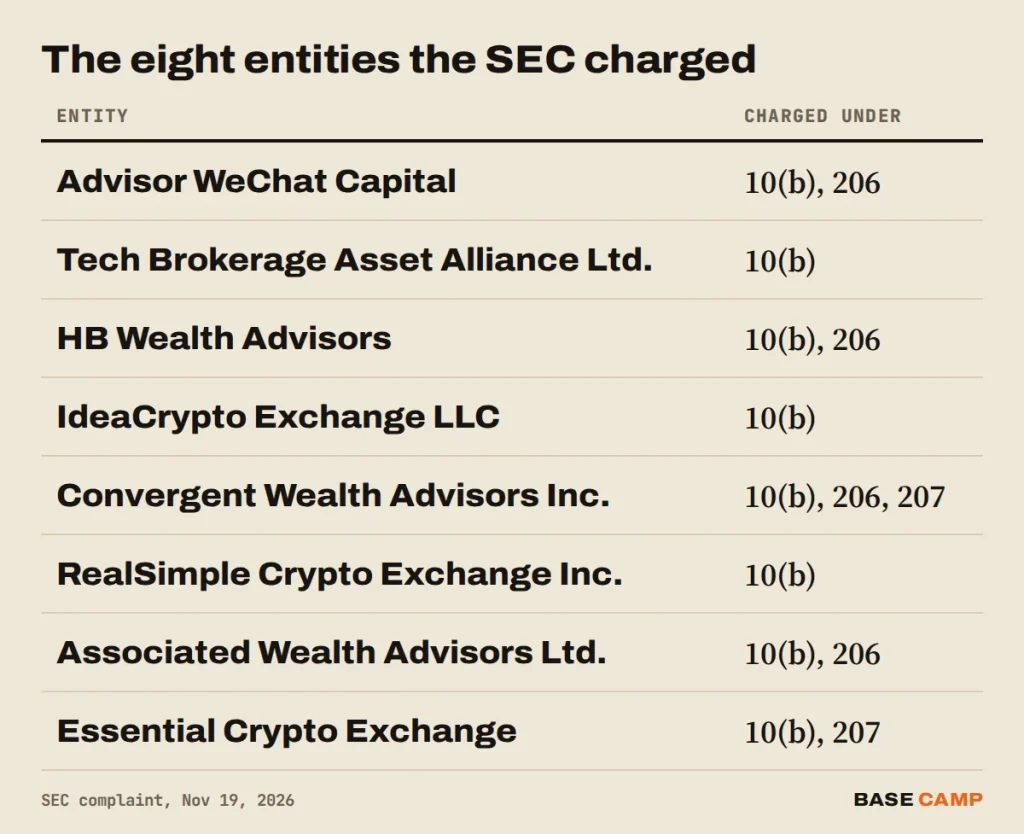
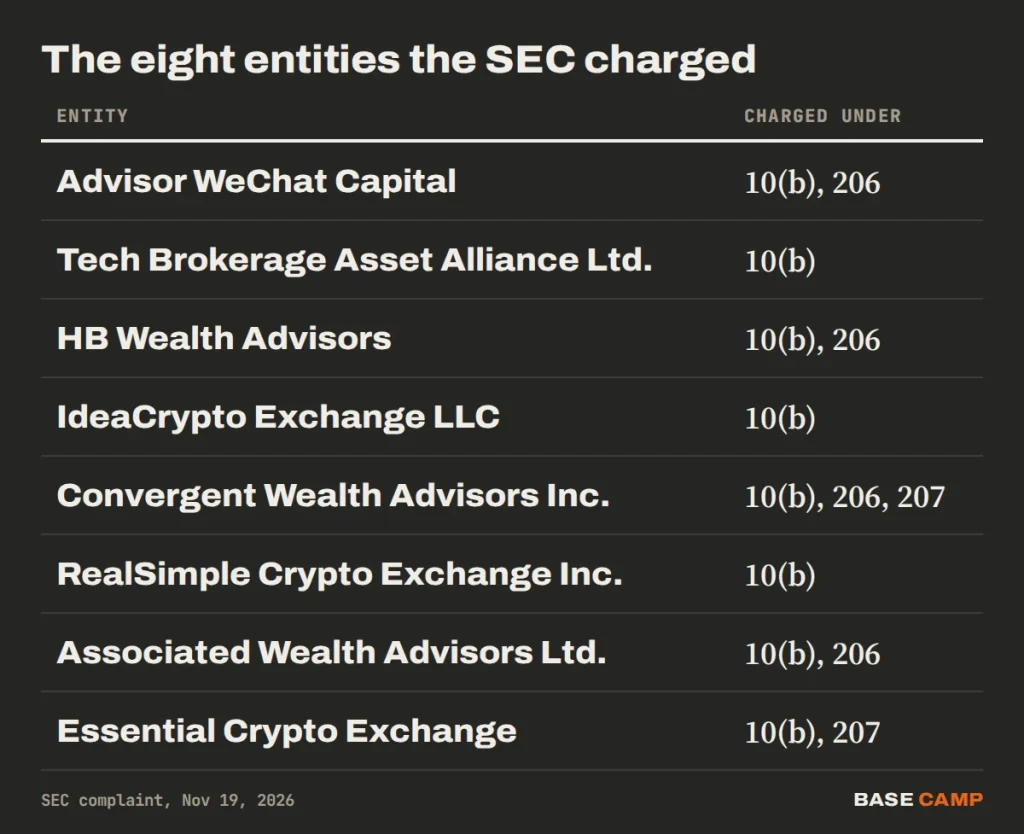
This SEC crypto fraud complaint, filed in the US District Court for the District of Colorado, charges all eight with fraud under Section 10(b) of the Exchange Act and Rule 10b-5. Five of them also face Investment Advisers Act charges under Sections 206 or 207. If any of these names showed up in your chats, this is the list to check:
Sponsored · Affiliate link
Save 20% on fees trading on WEEX
Base Camp may earn a commission if you sign up. It never affects what we write.
Why the SEC Filings Made the Scam Look Real
Because most people don’t know what a filing proves. A Form D, a notice companies file when they raise money privately, is submitted by the company itself, and the SEC’s investor site says nobody should treat one as evidence of “registration, licensure, or approval—in any capacity.”
That gap was the scheme’s best tool. The SEC says it has now removed a Form D filed by Tech Brokerage Asset Alliance Ltd. and Forms ADV, the registration form for investment advisers, filed by Convergent Wealth Advisors Inc. and Essential Crypto Exchange. Yes, a crypto “exchange” filed an adviser form.
The SEC’s own investor site has an alert on fraudsters who claim to be officially registered. A certificate with an SEC seal is a red flag on its own: the SEC does not issue registration certificates. Before sending money, look the person or firm up on Investor.gov, and treat investment advice from strangers in a chat as the start of a pitch, not a tip.
SIDE TRAIL: Coinbase Says Its AI Stopped $4.7M From Leaving Accounts in a Deepfake Elon Musk Tesla Giveaway
What the Case Means for US Crypto Investors
It is the same playbook the SEC sued over less than a year ago. On December 22, 2025, it charged three fake crypto platforms and four investment clubs over a scheme that took more than $14 million, also through social media ads and group chats, also in the Colorado federal court. This week’s case is more than twice that size.
A weak market makes the pitch easier. Bitcoin trades at $61,517 at the time of writing, down 10.24% over the week, and the Fear & Greed Index sits at 12, extreme fear. Promises of steady gains land hardest after a drawdown like this one.
For now, these are allegations. The SEC is asking the court for permanent injunctions, disgorgement with interest and civil penalties.
TRAIL MAP: Solana dApp Store Featured a Fake “SKR Claim” App That Asked for Seed Phrases
Regulators in Hong Kong, Singapore, mainland China and Switzerland helped with the case, and the SEC wants the next fake crypto exchange reported early. “We encourage the public to continue reporting these schemes,” said Laura D’Allaird, Chief of the SEC Enforcement Division’s Cyber and Emerging Technologies Unit, pointing to the agency’s online tip portal.

TANG has been trading crypto since 2017. The focus is technicals, DeFi and onchain data. On the chart, that means high-timeframe support, moving averages and momentum divergences. Onchain, it means regular checkups on where the data puts the cycle. TANG once ran CryptoJungle, a free community for researching and trading together, and brings that same spirit to Base Camp as one of its co-founders.
More from TANG