
The short version
- Bitcoin worst month since 2022: November 2026 is down about 21%, from $77,582 to $61,017 on Binance, the deepest drop since June 2022’s 37.3%.
- It only keeps that title on a close below about $61,734: June 2026 lost 20.4%, and a close above $62,066 puts November under 20%.
- US spot Bitcoin ETFs lost more than $5 billion this month, and in four earlier Novembers that fell over 15%, December closed lower every time.
- Next: the monthly close at 00:00 UTC on Tuesday, December 1 (7:00 p.m. Monday in New York), with $58,625 and $55,130 below and $64,700 above.
$16,565. That is how much Bitcoin has lost since November opened at $77,582 on Binance, and it leaves the coin down about 21% with four days to go. BTC trades at $61,017 at the time of writing.
That makes November the Bitcoin worst month since 2022 so far. The last one this bad was June 2022, when Bitcoin fell 37.3% from $31,801 to $19,942 in the middle of the Terra and Celsius collapse. But the title isn’t locked in yet. June 2026 was almost as ugly, and the gap between the two is only about $700 of price.
So which levels decide Monday’s candle, and what has December looked like after the last bad Novembers?
The most bullish read of the setup came overnight from CryptoQuant’s CEO, who looked at where the forced buying would sit:

The squeeze risk is on the short side.
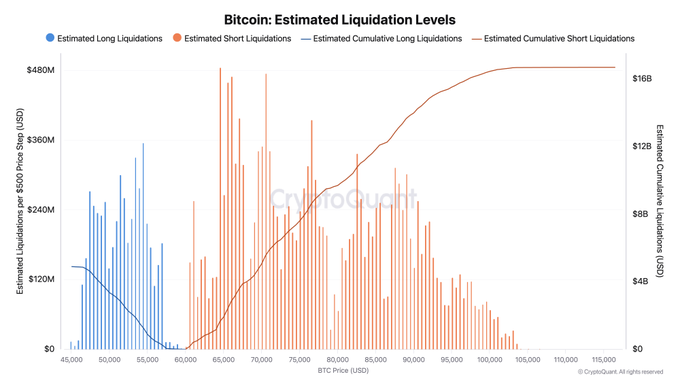
$16B in potential BTC short liquidations between $60K and $100K vs. under $5B in long liquidations below.
Short squeeze fuel is piling up for the next rally, imo.
Bitcoin Worst Month Since 2022? How November Compares
Here are the five worst months on Binance’s BTCUSDT chart since July 2022, measured from the monthly open to the monthly close.
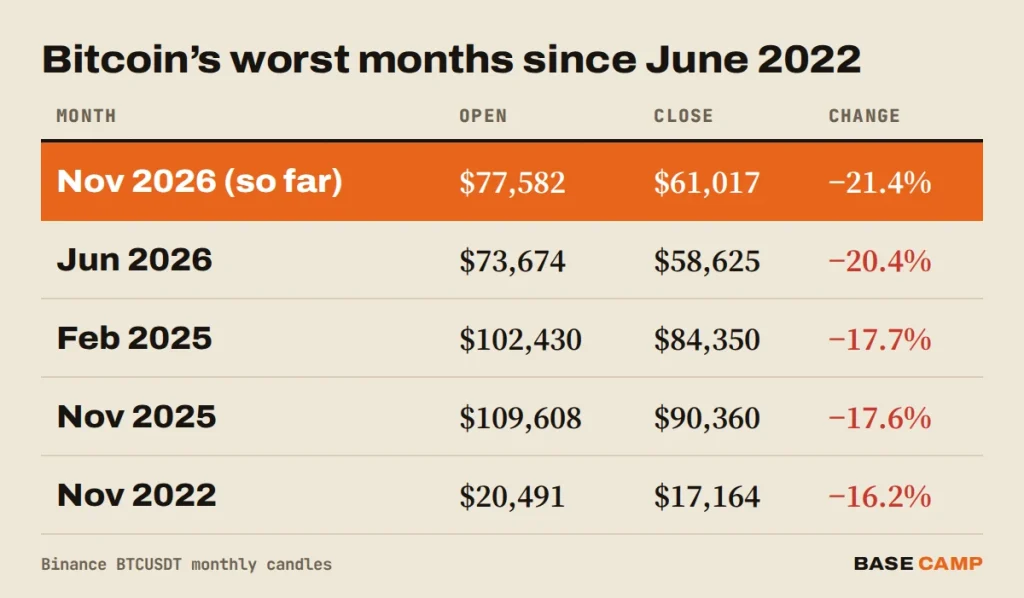
Three of the five are Novembers, and Bitcoin November 2026 followed a red October that lost 7.2%.
The race with June is closer than the headline suggests. June 2026 lost 20.4%. For November to lose more, the monthly candle has to close below about $61,734, and Bitcoin is about $700 under that line right now. A close above $62,066 would pull the loss back under 20%.
From the $81,196 high on November 4 to the $55,130 low on November 21, Bitcoin swung 32% inside one candle.
Sponsored · Affiliate link
Save 20% on fees trading on WEEX
Base Camp may earn a commission if you sign up. It never affects what we write.
Why Did November Fall So Hard?
Mostly because the biggest buyers of 2024 and 2025 turned into sellers at the same time.
November’s Bitcoin ETF outflows came to $4.94 billion over 17 sessions through Tuesday, according to Farside, with BlackRock’s IBIT behind $4.17 billion of it. Wednesday added at least $123.3 million before IBIT reported, which pushes the month past $5 billion.
The chain is short. Holders sell ETF shares, the issuers redeem them, and the Bitcoin behind those shares gets sold into the spot market. In November, too few buyers turned up to absorb it.
Strategy adds pressure late. Every fund that tracks an MSCI index has to drop MSTR by the close on November 30, the same day Bitcoin’s monthly candle closes. Our piece on the MSTR MSCI removal has the numbers. The forced selling is in the stock, yet it hits the biggest corporate holder of Bitcoin on the day that matters most for the chart.
Altcoins took it worse, as they usually do. On Binance, Ethereum (ETH USD) is down 24.5% this month at $1,703, Solana is down 25.5% at $71.21 and XRP is down 23.5% at $0.9571. When Bitcoin drops a fifth, the rest of the market rarely gets away with less.
The Crypto Fear & Greed Index reads 11, extreme fear.
SIDE TRAIL: Bitcoin ETF Outflows Slow to $231.4M as IBIT’s Exit Shrinks by Two Thirds, November Nears $5B
What Happened in December After the Last Bad Novembers?
December has been red every time. Binance’s BTCUSDT data goes back to 2017, and four Novembers in that stretch lost more than 15%. All four were followed by another losing month. (Our early-November look at history after a red October flagged late-cycle Novembers as the loud ones.)
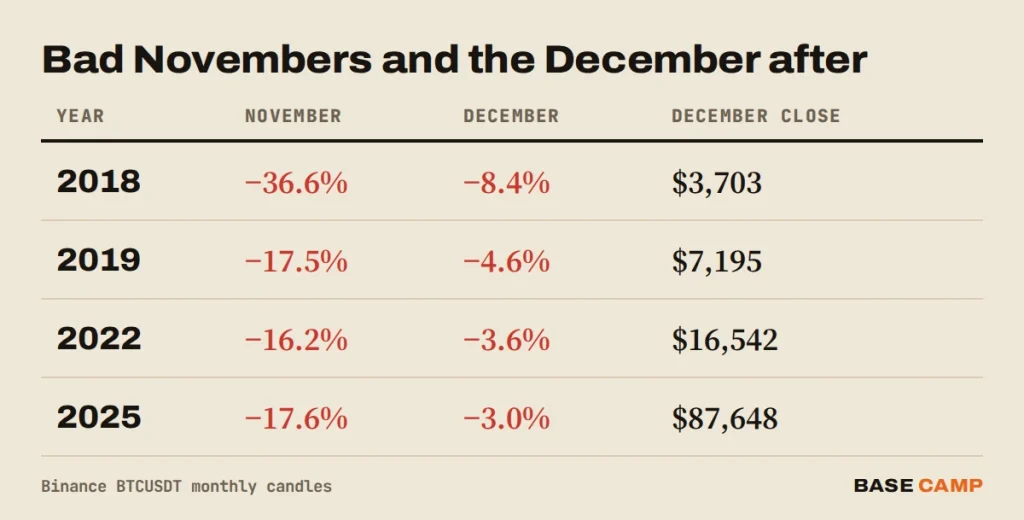
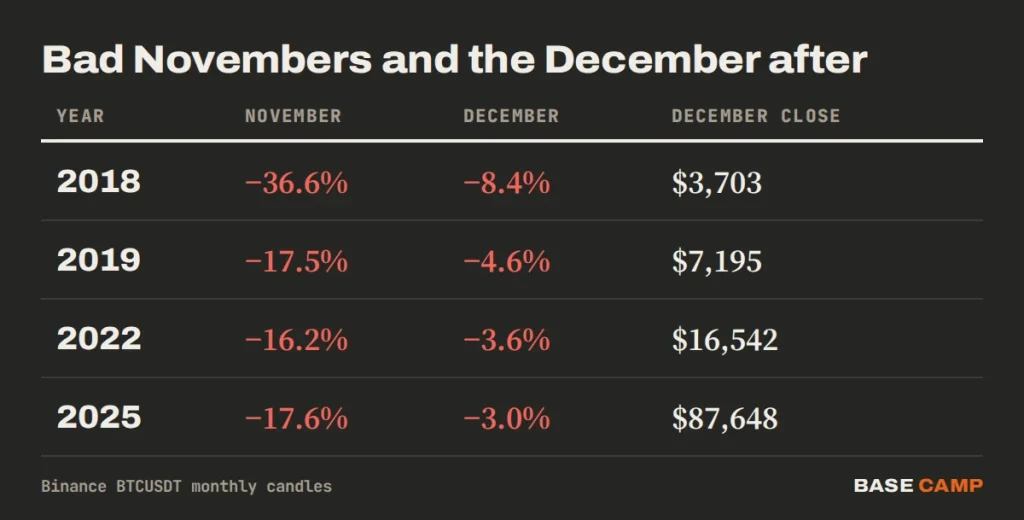
None of those Decembers was a second crash, though. The losses got smaller, from 8.4% in 2018 to 3.0% last year. In other words, the selling kept going, but slower.
Four years make a thin sample, and that is the one caveat worth keeping in mind here. Widen it to the month after each of Bitcoin’s five worst months since 2022, and the picture gets mixed: July 2022 bounced 16.8%, July 2026 gained 7.3%, while March 2025, December 2025 and December 2022 all closed lower.
The Short Squeeze Case Ki Young Ju Is Making
Ki Young Ju’s post puts about $16 billion of potential short liquidations between $60,000 and $100,000, against under $5 billion of long liquidations below the price. Those are estimated levels from CryptoQuant’s model, worked out from where leveraged positions were likely opened.
The logic works like this. A short squeeze starts when price rises into the levels where short sellers get force-closed. Each forced close is a market buy, which pushes price into the next cluster, and so on. With most of the leverage sitting above the price, a rally has more fuel than a drop does.
Fair enough on paper. The catch is that shorts don’t have to wait to be liquidated. Many of them can close early, add margin or hedge, and a squeeze map tells you where the pain is, not when it arrives. After a 21% month with ETFs still selling, the area to watch is whether price can get back above $64,700 first.
Bitcoin Price Analysis: Which Levels Decide the Monthly Close?
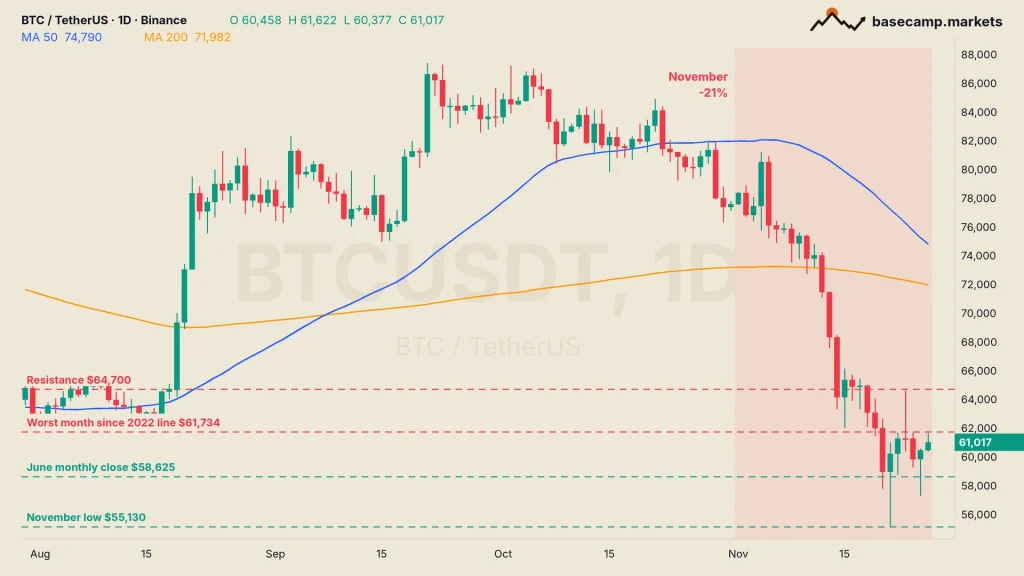
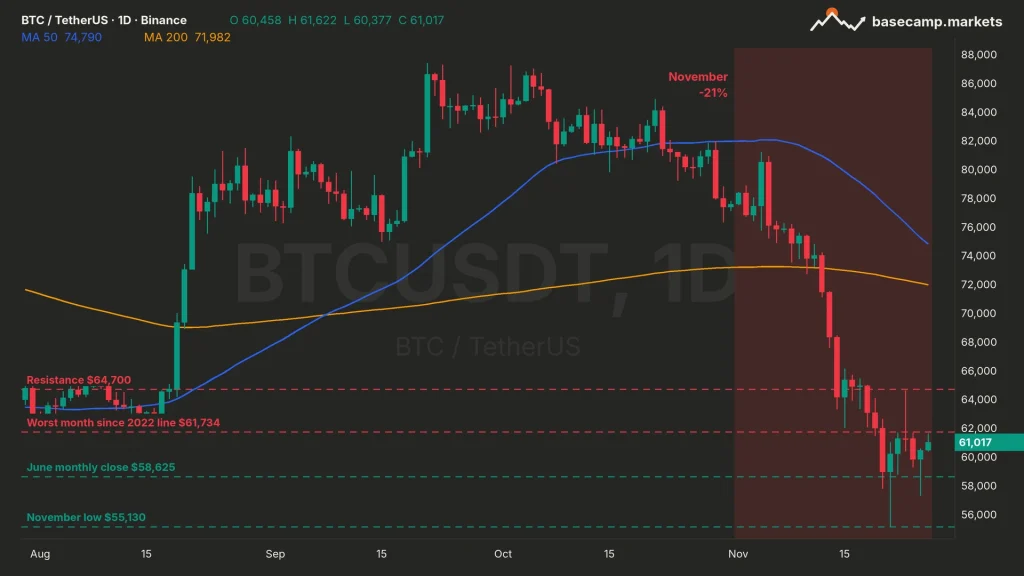
The monthly close comes down to four lines, and Bitcoin sits just under the one that matters most for the record books.
- The ceiling: $64,700. The nearest daily swing high, just above the $64,603 where the November 23 rally stalled.
- The record line: $61,734. Close below it and November keeps the Bitcoin worst month since 2022 label. Above $62,066 the loss is under 20%.
- June’s close: $58,625. A monthly close under it would be the lowest since January 2024. Galaxy is watching a similar line, the June 30 daily close at $58,525, after it withdrew its bear market bottom call.
- The floor: $55,130. The November 21 low.
The moving averages are far away. The 50-day moving average, the mean of the last 50 daily closes, sits at $74,790, and the 200-day is at $71,982. The 50-day has already turned down hard.
TRAIL MAP: How to Read a Candlestick Chart
The candle closes at 00:00 UTC on Tuesday, December 1 (7:00 p.m. Monday in New York). Until then, a bounce of about $700 is all it would take to hand the title back to June.

Teddy has been trading crypto since 2016. The focus is altcoins and EMA setups: finding coins sitting on key levels, waiting for support to hold or a range to be reclaimed, and trading the move from there. Bitcoin sets the tone, but the opportunities are usually in the alts.
More from Teddy