The short version
- Bitcoin mining difficulty is set to rise 9.03% at block 977,760, around 01:24 UTC on Friday, November 27, nearly undoing the 9.13% cut of November 14.
- Glassnode says the hashrate is 8% below last year’s level, the first annual decline since China’s 2021 ban, but our epoch count shows the widest gap in one stretch that Luxor largely ties to Texas power prices.
- At $59,126 a coin, our sum puts miners’ daily pay at $25.45 per petahash after the rise, less than at Saturday’s $55,130 low; Bitcoin would need $60,108 to match it.
- Next: the retarget itself, which moves earlier or later with every block. Follow Base Camp on X for more updates like this.
Bitcoin miners are about to get a pay cut on Thanksgiving night. The timing could hardly be worse.
Bitcoin mining difficulty is on track to rise 9.03% at block 977,760, which mempool.space puts at around 01:24 UTC on Friday, November 27 (8:24 p.m. Thursday in New York). It would be the biggest jump since February, and it would almost erase the 9.13% cut of November 14.
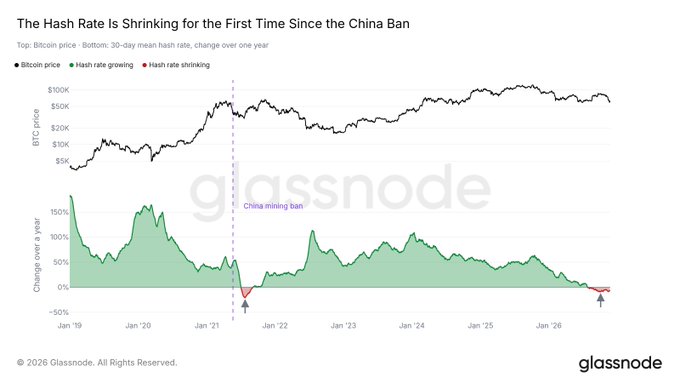
Yet the year-over-year picture points the other way. Glassnode says the network’s computing power has just done something it hasn’t done since China banned mining in 2021:

bitcoin:native miners are switching machines off.
The hash rate sits 8% below last year's level, the first annual decline since the 2021 China ban.
That drop was forced by policy; this one is price-driven, with hash price at an all-time low.
So the hashrate is down on the year, and mining is about to get harder anyway. How can both be true?
Why Is Bitcoin Mining Difficulty Going Up if Hashrate Is Down?
The two numbers look at different stretches of time. Difficulty only checks the last two weeks or so. Glassnode compares with a year ago.
Every 2,016 blocks, the network looks at how long those blocks took. The target is 10 minutes each. Too fast, and difficulty goes up. Too slow, and it comes down.
Right now blocks are coming fast. Since November 14 they have averaged 9 minutes 11 seconds, with 279 blocks left to go at the time of writing. If that pace holds, difficulty climbs from 134.82 trillion to about 147.0 trillion.
It is mostly a rebound. Machines that dropped off in early November came back, and the cut that rewarded everyone for their absence is being taken away again. Put the two moves together and difficulty ends up 0.9% below where it stood on October 29.
Almost a round trip. The cut we wrote about on November 12 will have lasted one epoch.
Sponsored · Affiliate link
Save 20% on fees trading on WEEX
Base Camp may earn a commission if you sign up. It never affects what we write.
One Epoch Fell Furthest
Our own count shows how uneven that yearly drop is. We took mempool.space’s difficulty history and worked out the average hash rate behind each two-week epoch, this year against the matching one last year, in exahashes per second (EH/s).
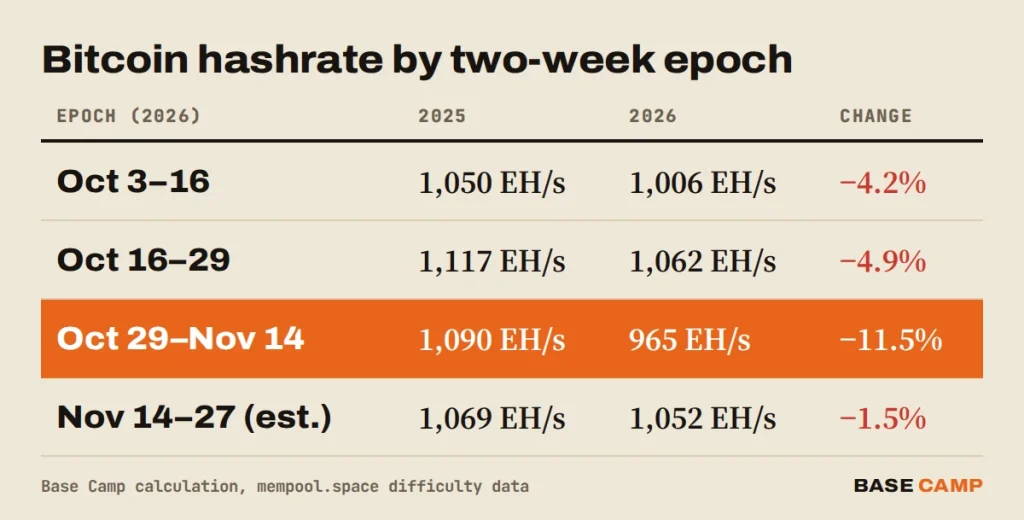
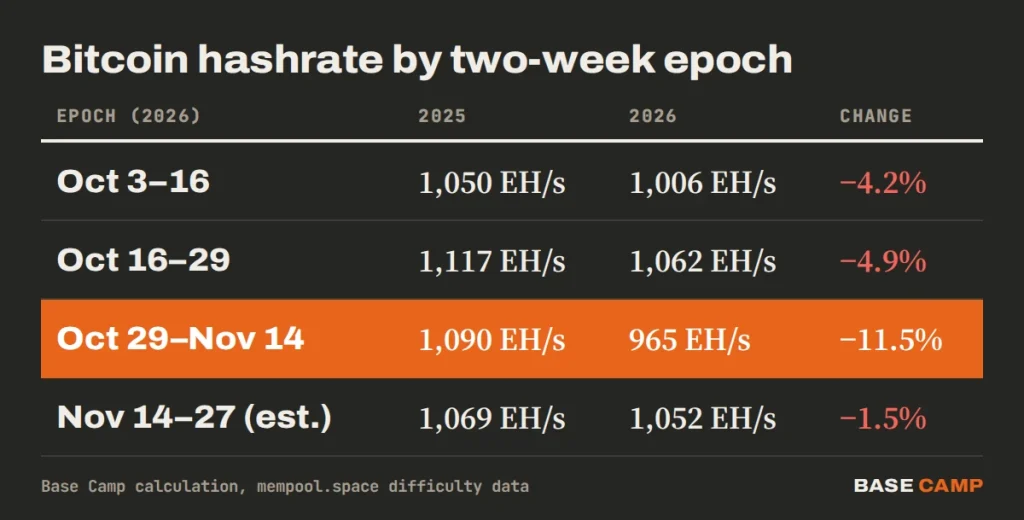
Every row is red. That fits Glassnode’s point: the network is smaller than it was last autumn.
But the biggest hole is one epoch, and Luxor has a different explanation for that one. Its Hashrate Index analysis blames West Texas electricity. Wind output there collapsed, power averaged $64 to $122 per megawatt-hour on the days from November 7 to 11, and Luxor estimates Texas hosts about 17% of the world’s hashrate. For a typical machine, power cost more than it earned in 45% of the epoch’s hours.
Luxor’s rough math says Texas can explain about three-quarters of that drop. Its best evidence is what came next. Bitcoin fell 13% between November 11 and 16, and the hashrate went up.
Power doesn’t explain October, though. The network was already running 4% to 5% behind last year before the Texas squeeze began.
SIDE TRAIL: Bitcoin Difficulty Adjustment: Miners Set for a 7.8% Cut Friday as Blocks Slow to 10m 51s
What the Bitcoin Mining Difficulty Increase Costs Miners
About 8.3% of their output. The same machine, burning the same power, finds that much less Bitcoin once difficulty rises 9.03%.
Miners track this through hashprice: what one petahash per second (PH/s) of machines earns in a day. Luxor’s November 23 report had it at $29.36, and warned that around $29 is at or below breakeven for many miners.
Bitcoin has fallen since. By our own sum, with today’s fees and the price at the time of writing, one petahash earns $27.75 a day. Friday’s rise would cut that to $25.45, less than at Saturday’s low, with Bitcoin almost $4,000 higher.
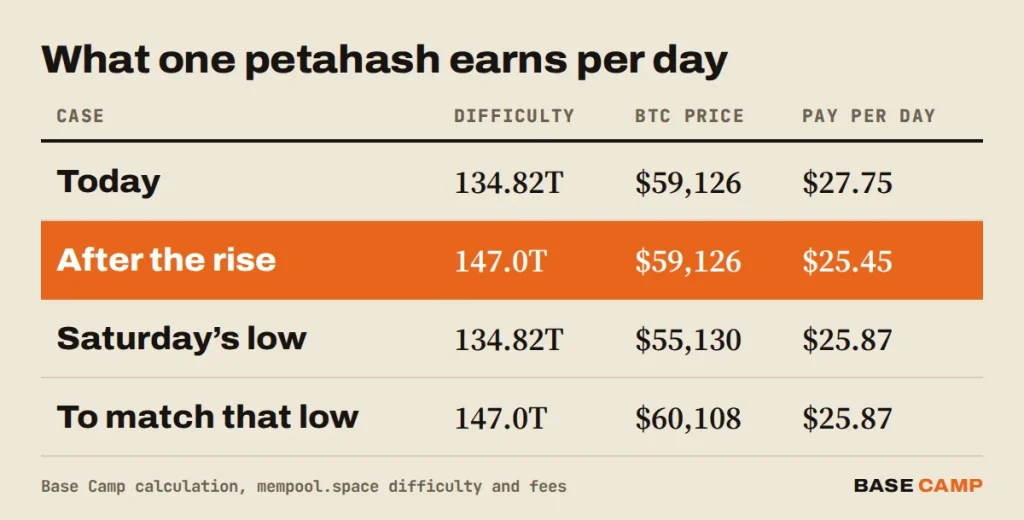
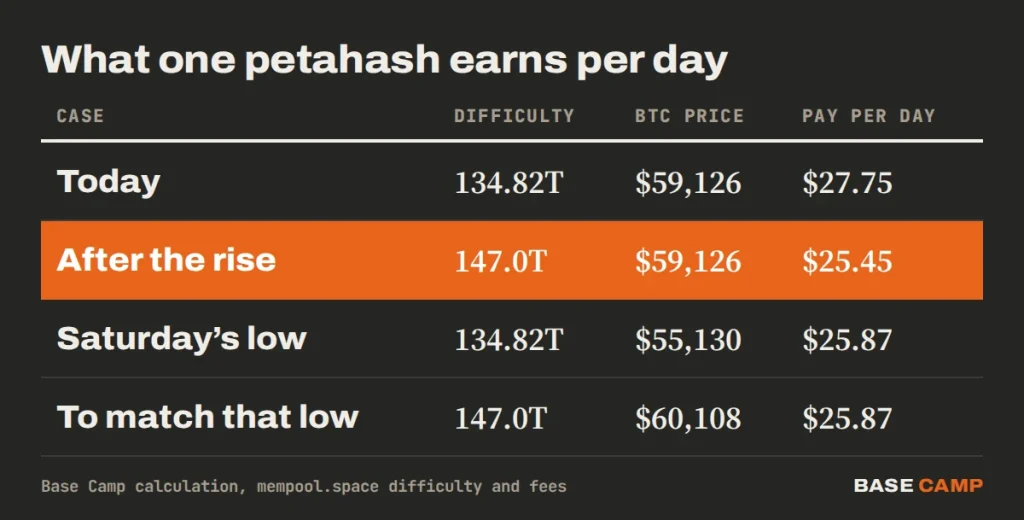
What does that mean for a real machine? At 25 joules per terahash, $25.45 works out to about $42 per megawatt-hour. Power that costs more than that loses money before any other bill is paid.
Fees are no help. The last 144 blocks paid miners 452.87 BTC in total, and just 2.87 BTC of it was fees, or 0.6%. The rest is the 3.125 BTC block reward.
The forward market isn’t betting on a rescue either. Luxor’s report shows contracts pricing an average hashprice of $27.08 over the next six months. That is less than miners earn today.
In theory, the fix is built in. If enough machines go dark, blocks slow down and the next adjustment, around December 11, gets easier. The catch is the two weeks in between. There is no early reset.
Miners who can’t wait sell coins, as we covered in our look at mining costs.
Bitcoin Price Analysis: Where Is the Miners’ Line?
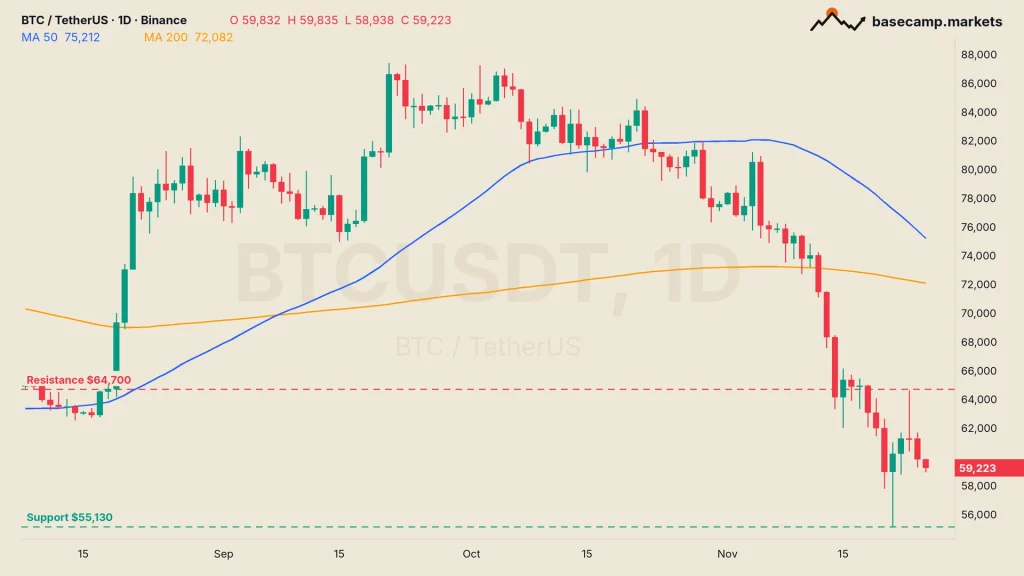
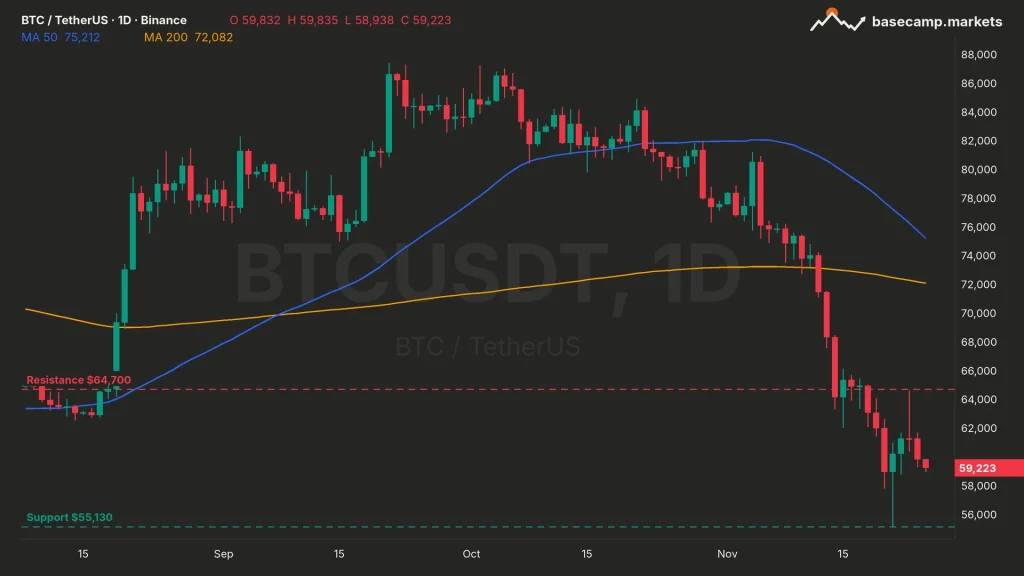
At $60,108, and Bitcoin is under it. BTC trades at $59,126 at the time of writing, down 2.1% in 24 hours and 8.5% over the week. Fear & Greed is at 13, extreme fear.
Stay below that line after the rise, and miners are paid less than they were at Saturday’s bottom. That’s all the line says. It isn’t a chart level.
Start with the weekly chart. Last week closed at $61,271, far under the 200-week moving average (MA), the average of the last 200 weekly closes, at $68,353. On the daily chart the 50-day MA is at $75,212 and the 200-day at $72,082. Price is below all of them.
- Resistance: $64,700. The last swing high. At about $64,465, miners would earn the same after the rise as they do today.
- First support: $58,115. The next swing low on the daily chart.
- The floor: $55,130. Saturday’s low.
None of this makes difficulty a sell signal. It doesn’t touch demand. It squeezes the people who have to sell some of their coins to keep the lights on.
TRAIL MAP: Bitcoin Cycles and the Halving
Even after a 9% jump, Bitcoin mining difficulty would still sit 5.8% below its record of 155.97 trillion.

TheCryptoMonk has been trading since 2017 and reads the market from the top down. The focus is macro and the high timeframes: where stocks, rates and liquidity are heading, and what the weekly and monthly charts say about Bitcoin. Short-term noise matters less than the bigger trend.
More from TheCryptoMonk