The short version
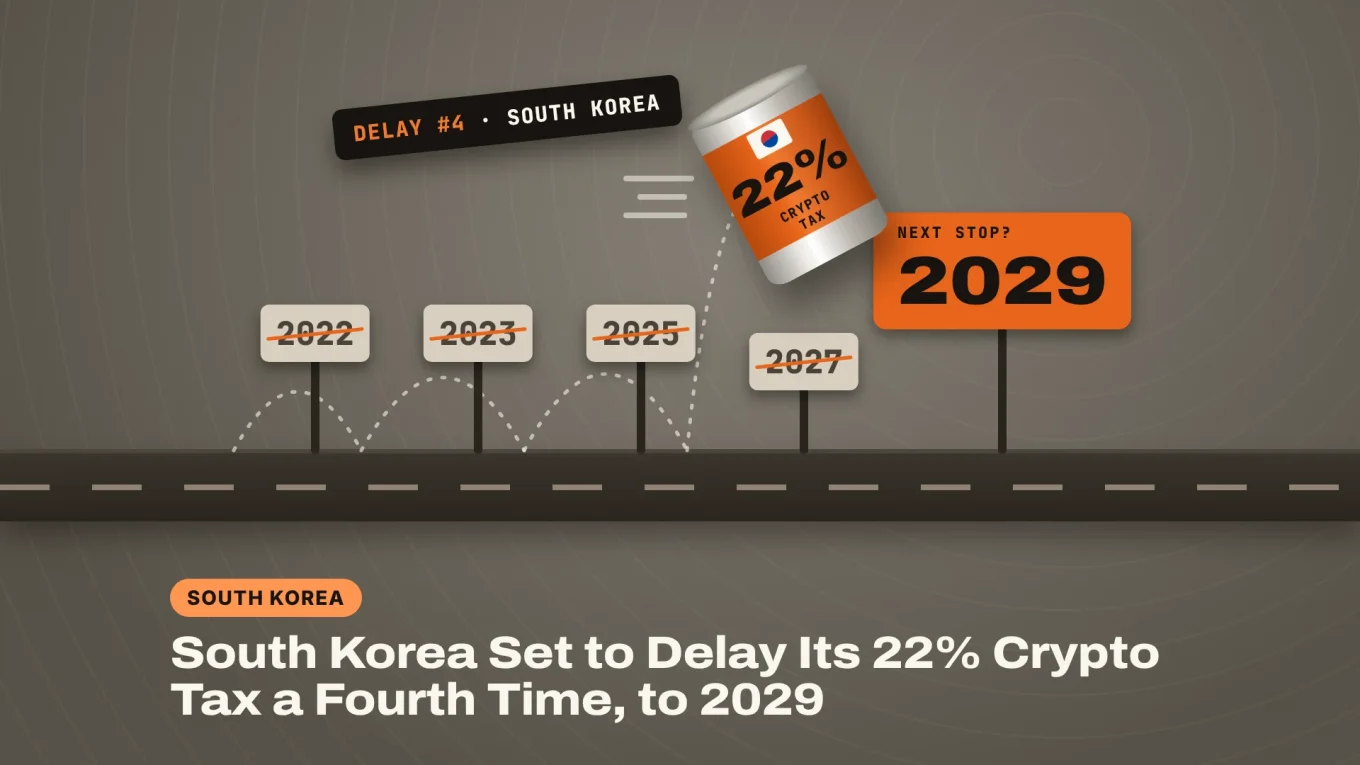
- South Korea crypto tax: the presidential office is leaning toward moving the 22% tax on yearly crypto gains above about $1,875 from January 1, 2027 to 2029, which would be its fourth delay.
- The main reason is the US, which joins the OECD’s crypto tax data swap only in 2029, so a 2027 start would hit traders on Korean exchanges while missing many who trade abroad.
- The crew is watching the National Assembly’s tax subcommittee, which starts reviewing tax bills on November 2; nothing is final until lawmakers vote.
South Korea crypto tax plans are slipping again. The presidential office is leaning toward pushing the country’s 22% crypto tax, due to start on January 1, 2027, back to 2029. If it goes through, it will be the fourth delay since lawmakers wrote the tax into law in 2020.
Nothing is final yet. A presidential office official told Seoul Economic Daily on Sunday that “nothing has been decided,” and the ruling party and the government still have to sign off. But the direction is clear, and the main reason sits outside Korea: the United States.
Tiger Research’s September survey shows where Korean investors stand on the tax:

Why Is the South Korea Crypto Tax Being Delayed Again?
Because the US joins the global crypto tax data swap only in 2029. Under the OECD’s Crypto-Asset Reporting Framework (CARF), exchanges record where their users live and what they trade, and tax offices pass that data to each other. Korea’s first exchange of data is due in 2027. The US, the biggest crypto market of all, comes in two years later.
Start the tax in 2027 and Seoul would see gains made on Korean exchanges such as Upbit and Bithumb, but not those made on many platforms abroad. Officials worry that would tax people who trade at home and let those who trade overseas slip through. The presidential office also weighed thin preparation and the mood among young voters, who hold a large share of Korea’s crypto.
Sponsored · Affiliate link
Save 20% on fees trading on WEEX
Base Camp may earn a commission if you sign up. It never affects what we write.
What Would the Delay Change?
A crypto tax delay changes the date, not the tax. Under the law today, Koreans would pay 22% (20% income tax plus 2% local tax) on yearly gains from selling or lending crypto above a yearly allowance of about $1,875. A trader who makes $10,000 in a year would owe about $1,790.
The bill behind the delay comes from Democratic Party lawmaker Park Min-kyu and was filed this month. It doesn’t name a year. It starts the tax on January 1 two years after Korea’s first CARF data exchange, which works out to January 1, 2029. A People Power Party bill from Kim Sang-hoon also asks for 2029, so both big parties lean the same way.
DISCOVER: Keeping a Trading Journal: What to Write Down and How to Learn From It
How Did South Korea Get to a Fourth Delay?
Korea’s levy was first meant to start in January 2022. Lawmakers moved it to 2023, then to 2025, and in December 2024 to January 2027, each time pointing to weak tax systems and missing investor protection. The finance ministry still held to 2027 on October 20, when First Vice Minister Kwon Dae-young told exchange bosses that “where there is income, there is tax.” The presidential office’s turn since then is what changed the odds.
Politics plays its part too. On the current timetable, the first crypto tax returns would be due in May 2028, a month after Korea’s general election in April.
What Happens Next?
On November 2 the National Assembly’s tax subcommittee meets to start its review of this year’s tax bills. Talks between the ruling party, the government and the presidential office follow the yearly parliamentary audit, and the Democratic Party has said it will settle the question this year. Korea’s tax bills usually pass together with the budget in early December.
Until lawmakers vote, the South Korea crypto tax still starts on January 1, 2027 by law. Traders on Korean exchanges lose nothing by keeping clean records of every trade either way.
EXPLORE: How to Buy Your First Crypto: Exchanges, Fees and KYC Without the Headaches
The crew is watching the November 2 subcommittee meeting and the party-government talks after the audit. A deal there would make 2029 all but certain.

In crypto since 2017, trading stocks for over 20 years. MBA. Follows the economic data and US markets closely.
More from Satoshi Flipper →