The short version
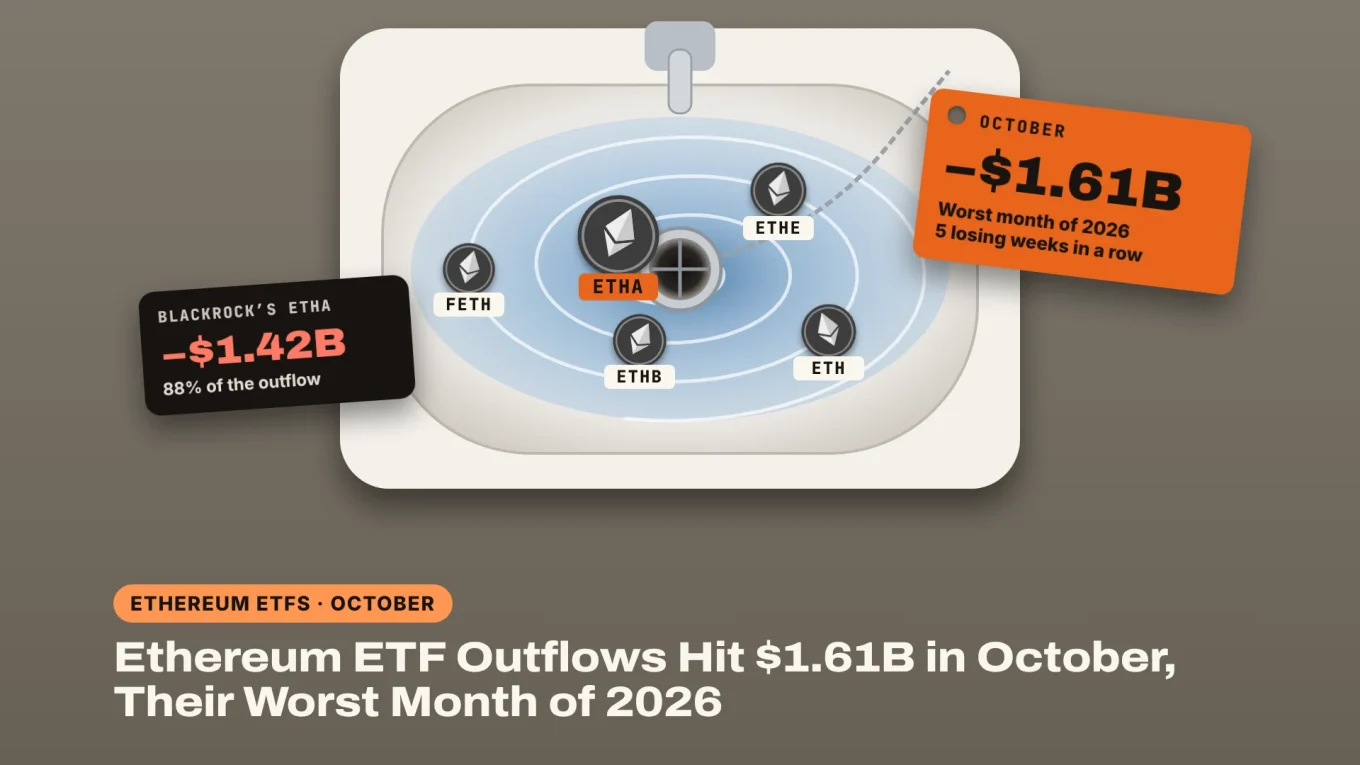
- Ethereum ETF outflows reached $1.61 billion in October, the worst month of 2026 for the US spot funds, with five losing weeks in a row and $155.7 million out on Friday alone.
- BlackRock’s ETHA lost $1.42 billion of it, 88% of the total, while Bitcoin ETFs lost $515.9 million over the same month and ETH fell 16%.
- Next: whether ETHA turns to inflows in early November and ETH holds its 200-day MA at $2,159. Make sure to follow Base Camp on X for the daily ETF numbers.
Ethereum ETF outflows ended October at $1.61 billion, the worst month of 2026 for the US spot funds. Friday added the last $155.7 million, and the month never really let up: five losing weeks in a row, and no week in the green since September.
That is three times what Bitcoin ETFs lost over the same month, from a group of funds a fraction of the size. ETH closed October down 16%, its worst month since June, and trades at $2,265 at the time of writing. So who sold, and what does it leave for November?
Farside’s Friday update closed the month:

𝗘𝘁𝗵𝗲𝗿𝗲𝘂𝗺 𝗘𝗧𝗙 𝗙𝗹𝗼𝘄 (𝗨𝗦$ 𝗺𝗶𝗹𝗹𝗶𝗼𝗻) – 2026-10-30
TOTAL NET FLOW: -155.7
ETHA: -76.6
ETHB: -19.5
FETH: -3.3
ETHW: 0
TETH: 0
ETHV: 0
QETH: 0
EZET: 0
MSSE: -0.7
ETHE: -21.5
ETH: -34.1
How Bad Was October for Ethereum ETFs?
The worst month of the year, by a distance. US spot Ethereum ETFs lost a net $1,607.2 million in October, per Farside’s data, and Ethereum ETF flows ended red in every one of the month’s weeks.
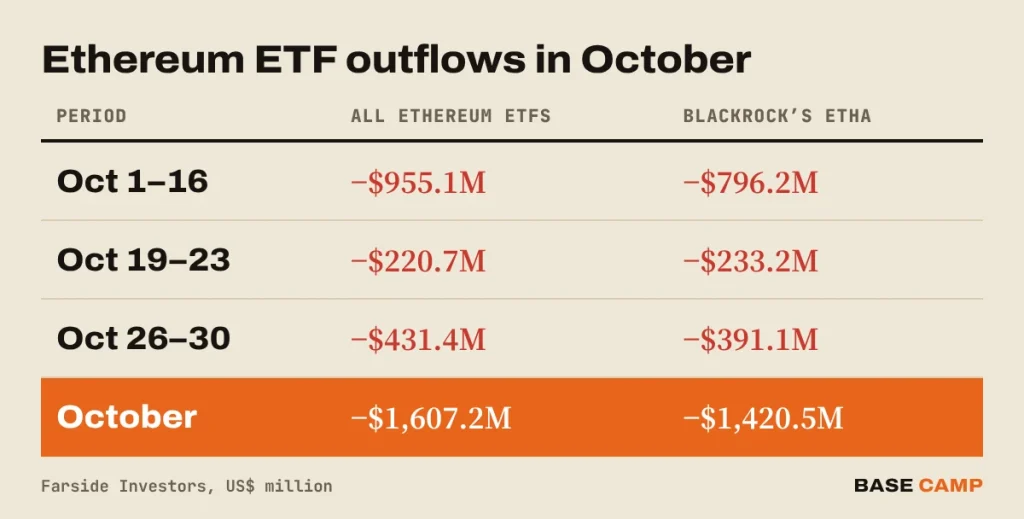
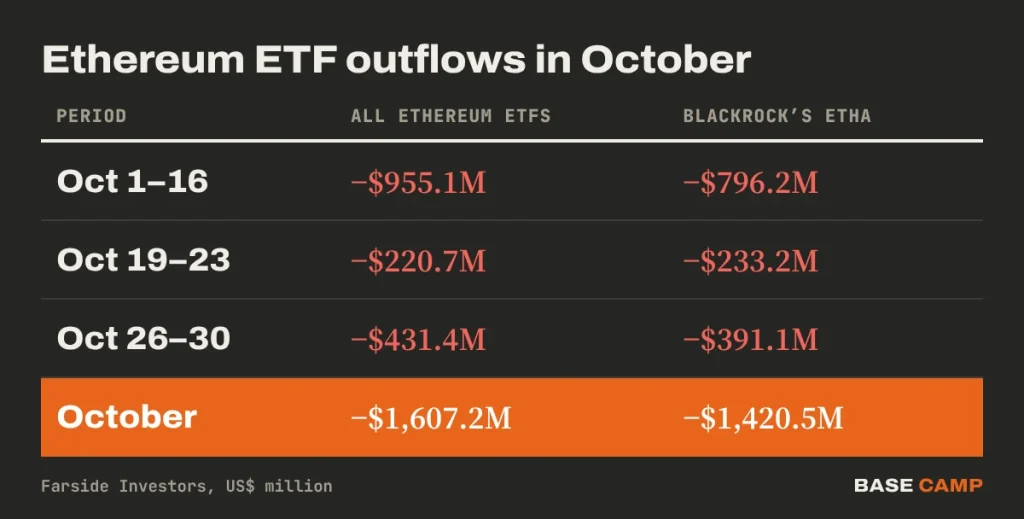
By October 20 the month had already passed $1 billion and become the biggest outflow of 2026, SoSoValue’s data showed. It also wiped out September, when the funds took in about $832 million. October took back nearly twice that.
The final $1.61 billion is also more than the roughly $1.42 billion that left in November 2025. Until now, that was the funds’ worst month since their July 2024 launch, per SoSoValue.
Sponsored · Affiliate link
Save 20% on fees trading on WEEX
Base Camp may earn a commission if you sign up. It never affects what we write.
Who Is Selling Ethereum ETFs?
Mostly BlackRock’s clients. ETHA lost $1.42 billion in October, 88% of the group’s outflow. In the week of October 19 it lost more than the whole group, as small inflows elsewhere were swamped.
Friday showed the rest joining in. ETHA lost $76.6 million, Grayscale’s mini Ethereum fund $34.1 million, Grayscale’s ETHE $21.5 million and BlackRock’s staked Ethereum fund ETHB $19.5 million. Fidelity’s FETH, the one fund that took money in over the last week ($63.1 million), slipped $3.3 million.
The contrast with Bitcoin is the story of the month. Bitcoin ETFs ended October $515.9 million in the red, after a $643.2 million exit on Friday. Ethereum funds, far smaller, lost more than three times as much. When fund buyers did buy in October, they bought Bitcoin, and BlackRock’s IBIT in particular.
SIDE TRAIL: Ethereum ETF Outflows Pass $1B as Bitcoin ETFs Buy
Why Did Ethereum ETF Outflows Get Worse?
Mostly the ETH price. It opened October at $2,686 and closed it at $2,256 on Binance, a 16.0% drop, while BTC lost 7.2%. Fund money tends to follow what is working, and in October that wasn’t Ethereum.
The month got worse at the end, too. ETH slid from $2,360 on Thursday to a $2,174 low on Friday as the $6.36 billion Binance hack hit the market. Ethereum ETFs lost $261.2 million over those two sessions, and Friday was the first day of fund numbers with the hack in it. Fear & Greed reads 34, still fear.
Ethereum Price Analysis: Can ETH Hold the 200-Day?
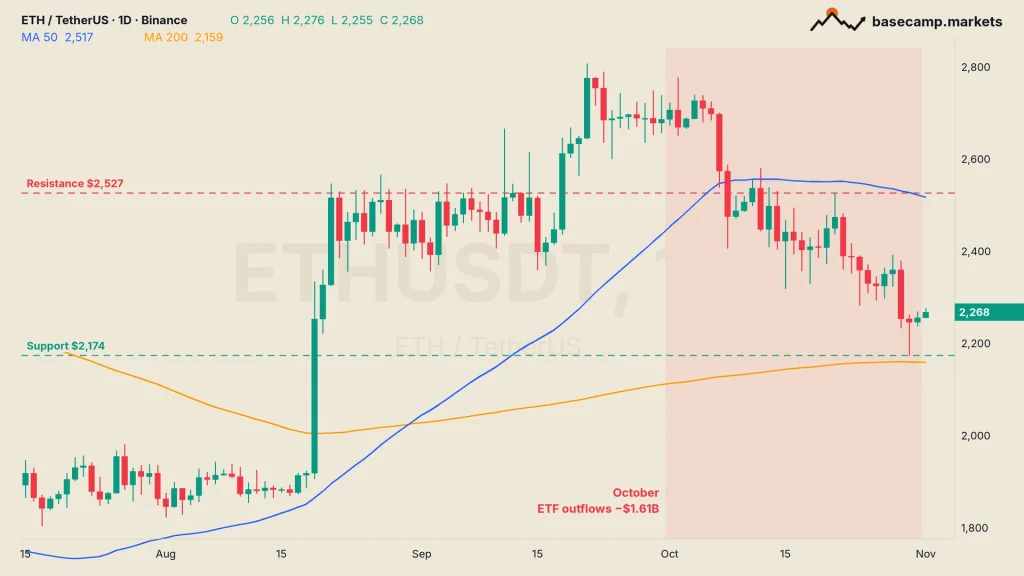
So far, yes. ETH sits about 5% above its 200-day moving average at $2,159, and Friday’s low of $2,174 stopped just above it. The 50-day is at $2,517, near the October 21 high of $2,527, the last time ETH tried to bounce.
In the bull case, ETHA turns to inflows and ETH climbs back to the 50-day at $2,517. In the base case, the funds keep leaking slowly and ETH chops between $2,174 and $2,527. In the bear case, a daily close under the 200-day at $2,159 would turn the trend down and leave little support until the $1,850 area.
TRAIL MAP: Indicators Worth Knowing: Moving Averages, RSI and Volume
The first week of November will show whether October was a peak or a trend. One green week for the group would be the first since September. Until then, the line to watch in Farside’s table is BlackRock’s, not the total.

Teddy has been trading crypto since 2016. The focus is altcoins and EMA setups: finding coins sitting on key levels, waiting for support to hold or a range to be reclaimed, and trading the move from there. Bitcoin sets the tone, but the opportunities are usually in the alts.
More from Teddy